Оглавление
What is HDPE?
High-Density Polyethylene (HDPE) is a highly versatile thermoplastic polymer derived from petroleum. Renowned for its exceptional strength-to-density ratio, outstanding chemical resistance, and rugged durability, it serves as a cornerstone material across countless industrial and consumer applications.
HDPE Applications
Because it can withstand high temperatures, resists corrosion, and doesn’t leach chemicals easily, you can find HDPE in:
Packaging: Beyond the Everyday Bottle
These everyday packaging items represent the most common and vital applications of High-Density Polyethylene (HDPE) in our daily lives. Known for its distinct matte finish and rigid durability, HDPE provides an exceptional moisture barrier and chemical resistance that makes it the gold standard for blow-molded retail containers. For items like milk jugs, the plastic safely seals liquids without altering flavor, while its high Environmental Stress Cracking Resistance (ESCR) allows shampoo bottles and heavy-duty bleach containers to hold highly volatile, corrosive, or soapy liquids for months on grocery store shelves without degrading or leaking. When processed into ultra-thin, film-grade sheets, the same polymer is transformed into everyday grocery bags; because its molecular chains are highly aligned and tightly packed, it delivers incredible tensile strength and puncture resistance even at a microscopic thickness, allowing a feather-light plastic bag to carry heavy groceries without tearing.


Piping Systems: The Bedrock of Modern Infrastructure
High-performance High-Density Polyethylene (HDPE) pipes have revolutionized municipal and industrial infrastructure, serving as a highly durable, modern replacement for legacy materials like concrete, clay, and ductile iron. In water transport, these pipes ensure safe delivery because the polymer is completely chemically inert, meaning it will never rust, corrode, or scale, thereby maintaining clean water quality and optimal hydraulic flow over a lifespan exceeding fifty years. For natural gas distribution, HDPE’s exceptional flexibility and resistance to ground movement allow it to safely absorb earth shifts or seismic activity without cracking, while its specialized heat-fused joints melt the pipe ends together to create a continuous, monolithic system that is completely leak-free and structurally stronger than the pipe itself. This same structural integrity and high chemical resistance make HDPE pipes indispensable for sewage and wastewater transport, where they effortlessly withstand the highly corrosive acids, harsh industrial chemicals, and abrasive slurries found in municipal waste streams without suffering from the erosion or environmental stress cracking that typically plagues traditional concrete or metal lines.

Consumer Goods: Durability Meets Everyday Safety
This unique combination of safety and rugged durability makes High-Density Polyethylene (HDPE) a premier material for products that undergo heavy, daily human contact and physical wear. Because it is completely non-toxic and FDA-approved for direct food contact, thick sheets of HDPE are widely used to manufacture commercial kitchen cutting boards that do not absorb moisture, food juices, or bacteria, and can withstand harsh, high-temperature dishwasher sanitizing cycles without warping or dulling knife blades. Its incredible impact strength—meaning it absorbs energy and deforms rather than shattering into sharp, dangerous shards upon impact—makes it the ideal choice for children’s toys, playground structures, and heavy-duty outdoor coolers that need to survive rugged transport and drops. Furthermore, because UV-stabilizers can be mixed directly into the polymer during production, consumer items like curbside recycling bins, trash cans, and patio furniture can remain outdoors year-round, completely resisting the cracking, color fading, or chalking that typically occurs under prolonged exposure to intense sunlight and harsh weather.

Industrial Uses: Extreme Engineering Solutions
In heavy industrial and environmental engineering applications, High-Density Polyethylene (HDPE) serves as a critical protective barrier and structural material due to its immense density, impermeable nature, and total immunity to biological decay. When extruded into massive, continuous sheets known as geomembranes, it acts as the primary landfill liner system, creating a heavy-duty, puncture-resistant shield that prevents hazardous chemicals and toxic leachate from seeping into the surrounding soil and contaminating local groundwater networks. This same level of uncompromising chemical resistance allows HDPE to be rotationally molded into large-scale, industrial chemical tanks that safely store aggressive acids, caustic bases, and water-treatment chemicals under intense environmental stress without developing micro-cracks or suffering from corrosive degradation. Furthermore, when post-consumer HDPE is recycled and extruded into synthetic plastic lumber, its natural resistance to moisture absorption and wood-boring insects makes it a premier, zero-maintenance alternative to traditional timber for outdoor decking, park benches, and marine pilings, ensuring structures remain rot-free even when permanently submerged in harsh saltwater environments.

HDPE vs. LDPE: What's the Difference?
While both are made from ethylene monomers, their molecular structures give them completely different personalities:
| Функция | HDPE (High-Density) | LDPE (Low-Density) |
|---|---|---|
| Molecular Structure | Linear structure with minimal branching. Molecules pack tightly together. | Highly branched structure. Molecules are loose and spread out. |
| Density & Strength | High density. Rigid, tough, and highly durable. | Low density. Flexible, soft, and easy to tear. |
| Heat Resistance | High (can withstand temperatures up to 120°C). | Lower melting point (around 90°C). |
| Typical Products | Milk jugs, water pipes, hard hats, detergent bottles. | Plastic wrap, sandwich bags, squeeze bottles. |
Can HDPE Be Recycled?
Yes, absolutely! In fact, HDPE is one of the easiest and most commonly recycled plastics in the world. It carries the Resin Identification Code #2 (the recycling triangle with a “2” inside).
HDPE Pipe Recycling
Industrial and construction HDPE pipes are 100% recyclable. Because these pipes are thick and heavy, recycling them keeps massive amounts of plastic out of landfills.
Used or scrap pipes are collected from construction sites.
They are heavily washed to remove dirt, mud, or chemical residues.
Because of their toughness, they are fed into heavy-duty shredders before being processed back into raw material.
What is Made from Recycled HDPE?
Recycled HDPE (rHDPE) is incredibly robust and is used to manufacture:
Premium Plastic Lumber & Decking: One of the most commercially successful uses for rHDPE is its transformation into synthetic timber. It serves as an eco-friendly, completely rot-free alternative to natural wood for outdoor furniture, park benches, and coastal boardwalks. Unlike traditional lumber, rHDPE decking requires no staining, sealing, or painting; it is entirely immune to moisture absorption, splintering, and wood-boring insects, allowing it to withstand decades of harsh weather and heavy foot traffic with virtually zero maintenance.
Infrastructure & New Piping Systems: While virgin resin is typically reserved for high-pressure drinking water and gas mains, recycled HDPE finds a critical second life in structural utility piping. It is widely extruded into non-potable gravity drainage lines, stormwater culverts, and corrugated cable-conduit pipes. These recycled conduits shield underground fiber-optic and electrical grids from shifting soil and moisture, proving that rHDPE can reliably support subterranean municipal infrastructure.
Heavy-Duty Industrial Storage Containers: The logistics and material handling industries rely heavily on the rugged impact resistance of recycled polymer. It is molded into heavy-duty distribution crates, structural shipping pallets, and large-scale automated warehouse bins. These products routinely endure violent drops, extreme forklift impacts, and heavy loads, yet rHDPE allows them to retain their shape and structural integrity over thousands of shipping cycles.
Weather-Resistant Lawn & Garden Products: In residential and commercial landscaping, rHDPE replaces short-lived materials with products designed for permanent outdoor exposure. It is fabricated into durable flower pots, commercial planter boxes, flexible landscape edging, and residential fencing. Because the recycled plastic naturally resists soil acidity, fertilizers, and constant moisture exposure, these garden products will not rot, crack, or leach harmful chemicals into the surrounding soil.
How is HDPE Recycled?
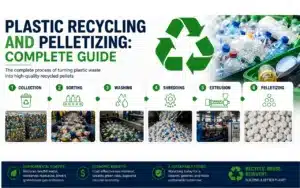
The transition from a discarded milk jug or pipe into a reusable raw material follows a strict mechanical recycling process:
1. Collection & Optical Sorting
Post-consumer and post-industrial plastics are gathered and routed to Material Recovery Facilities (MRFs). Here, advanced near-infrared (NIR) optical sorters rapidly identify and isolate Resin Identification Code #2 (HDPE) from other plastics like PET or PVC. The material is further sorted by color; uncolored or translucent HDPE (like milk jugs) commands a significantly higher market premium because it can be dyed into any color during remanufacturing, whereas mixed-color fractions can only be recycled into dark gray or black products.

2. Washing & Decontamination
Once isolated, the sorted HDPE undergoes rigorous friction washing and hot chemical baths. This stage is critical for removing residual organic matter, stubborn paper or plastic labels, volatile adhesives, and dirt. Any lingering contaminants can cause chemical off-gassing or structural weak points during the later melting stage, so maintaining high water purity and using precise caustic wash solutions is paramount.

3. Shredding & Mechanical Grinding
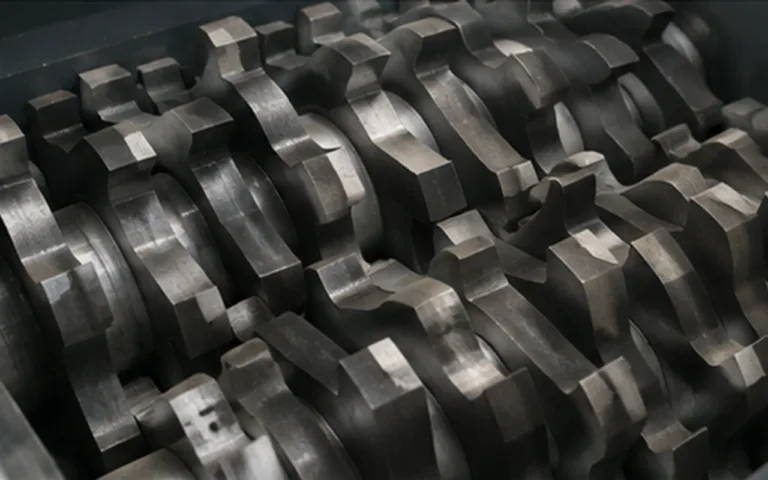
Clean, sorted containers and pipes are fed into heavy-duty industrial shredders and granulators. High-torque steel blades chop the rigid plastic down into small, uniform flakes, typically ranging from 6mm to 12mm in size. Achieving a uniform flake size ensures consistent bulk density, which allows for a steady, predictable feed rate into the downstream processing equipment.
4. Extrusion & Melt Pelletizing
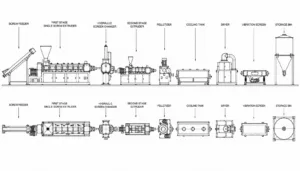
The uniform HDPE flakes are fed into a heated extruder barrel, where a rotating screw subjects them to high shear force and temperatures hovering around 200°C to 230°C. The plastic is completely homogenized into a molten state, forced through fine mesh screens to filter out any microscopic impurities, and pushed through a die head. A water-ring or underwater pelletizer cuts the emerging molten strands into uniform, dust-free plastic pellets. These high-quality rHDPE pellets are cooled, dried, and packaged for sale back to manufacturers as a direct substitute for virgin resin.

Choosing the Right HDPE Pelletizing Machine
Single-Screw Extruder: Ideal for clean, consistent HDPE flakes (like post-industrial scrap). It is reliable, cost-effective, and easy to maintain.
Twin-Screw Extruder: Best if you are compounding or mixing HDPE with additives, colorants, or fillers. It offers superior mixing and degassing capabilities.
Water-Ring Die Face Cutting: The most common cutting system for HDPE. The melted plastic is cut into pellets right at the die face and immediately cooled by water, resulting in perfectly uniform, round pellets.
Features to Look For
Pro-Tip for Buyers: When selecting an HDPE pelletizing machine, look for a system with a vacuum degassing zone. HDPE pipes and bottles often contain trapped moisture or printing inks; a vacuum system extracts these gasses during melting to prevent air bubbles in your final pellets.
Top Industry Recommendations
When sourcing machinery, look for manufacturers known for high-torque gearboxes and wear-resistant bimetallic screws, such as Erema, Starlinger, or high-end Taiwanese/Chinese manufacturers like Genius Machinery and Aceretech. A robust machine will easily handle the high viscosity of HDPE, ensuring a smooth, profitable recycling operation.
Common Questions About Recycling Plastic Pelletizing Equipment
Q: What materials can be processed by an HDPE recycling machine?
А:
HDPE recycling machines can process HDPE bottles, drums, pipes, containers, injection molding scraps, and various post-consumer or post-industrial HDPE waste.
Q: What capacity is available with this HDPE Pelletizing Machine?
А:
Machine capacities typically range from 100 kg/h to over 1000 kg/h, depending on the material type and production requirements.
Q: Can the machine process dirty HDPE materials?
А:
Yes. However, heavily contaminated materials should be washed before pelletizing to improve pellet quality and protect the equipment.
Q: Do I need a washing line before pelletizing?
А:
For post-consumer HDPE waste, a plastic washing line is usually recommended to remove dirt, labels, oil, and other contaminants.
Q: What pelletizing system is suitable for HDPE recycling?
А:
Common options include water strand pelletizing, water ring pelletizing, and underwater pelletizing. The best choice depends on your material characteristics and pellet quality requirements.
Q: What is the quality of the recycled HDPE pellets?
А:
With proper material preparation and filtration, the machine can produce uniform HDPE pellets suitable for various plastic manufacturing applications.
Q: What information is needed for a quotation?
А:
To receive an accurate quotation, please provide:
- Material type
- Material photos or videos
- Required capacity
- Final pellet application
- Installation country
- Power supply requirements
Q: How long is the machine delivery time?
А:
Delivery time varies depending on machine configuration and production schedule. Contact us for the latest lead time. Generally lead time is 30 days around.