What is PP Non-Woven Fabric?
PP non-woven fabric is a fabric-like material made primarily from polypropylene (PP) fibers or polymer, without traditional weaving or knitting.
Instead of weaving yarns together, the fibers are formed into a web and bonded through processes such as thermal bonding, mechanical bonding, chemical bonding, or other nonwoven manufacturing methods.
PP is one of the commonly used polymers for non-woven fabric because it is lightweight, moisture-resistant, chemically stable, and relatively easy to process.
PP non-woven fabric is commonly used for:
Shopping bags
Agricultural fabric
Medical and hygiene products
Protective materials
Packaging products
Industrial materials
Disposable products
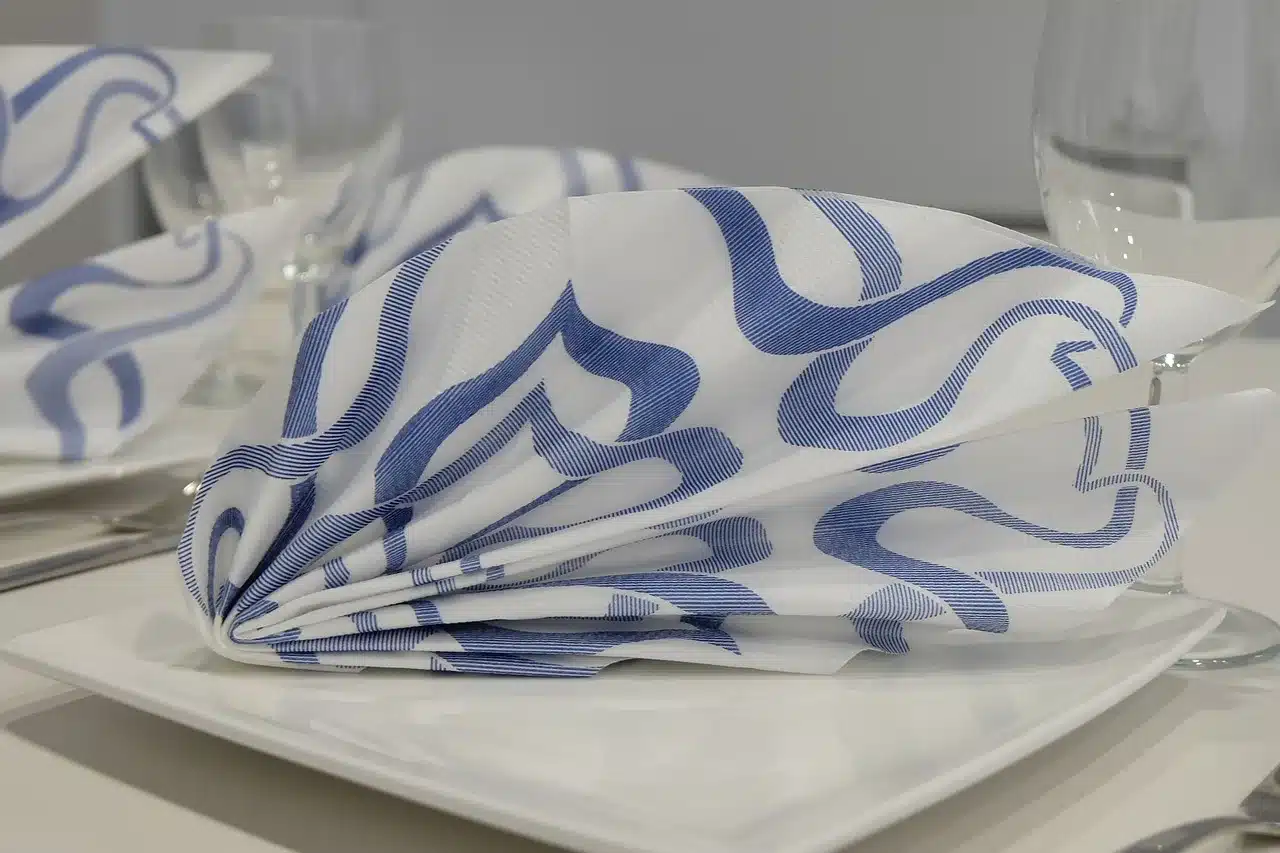
It is important to distinguish PP non-woven fabric from non-woven fabric as a general material category. Not all non-woven fabrics are made from PP. PET, PE, PLA, viscose, and other fibers can also be used depending on the product and manufacturing process.
Common PP Non-Woven Fabric Waste
PP non-woven fabric waste can be generated during manufacturing and product processing.
Typical PP waste includes:
PP non-woven fabric rolls
Edge trim
Cutting waste
Production scrap
Offcuts
Rejected PP non-woven bags
Clean post-industrial PP fabric
Other suitable PP non-woven waste
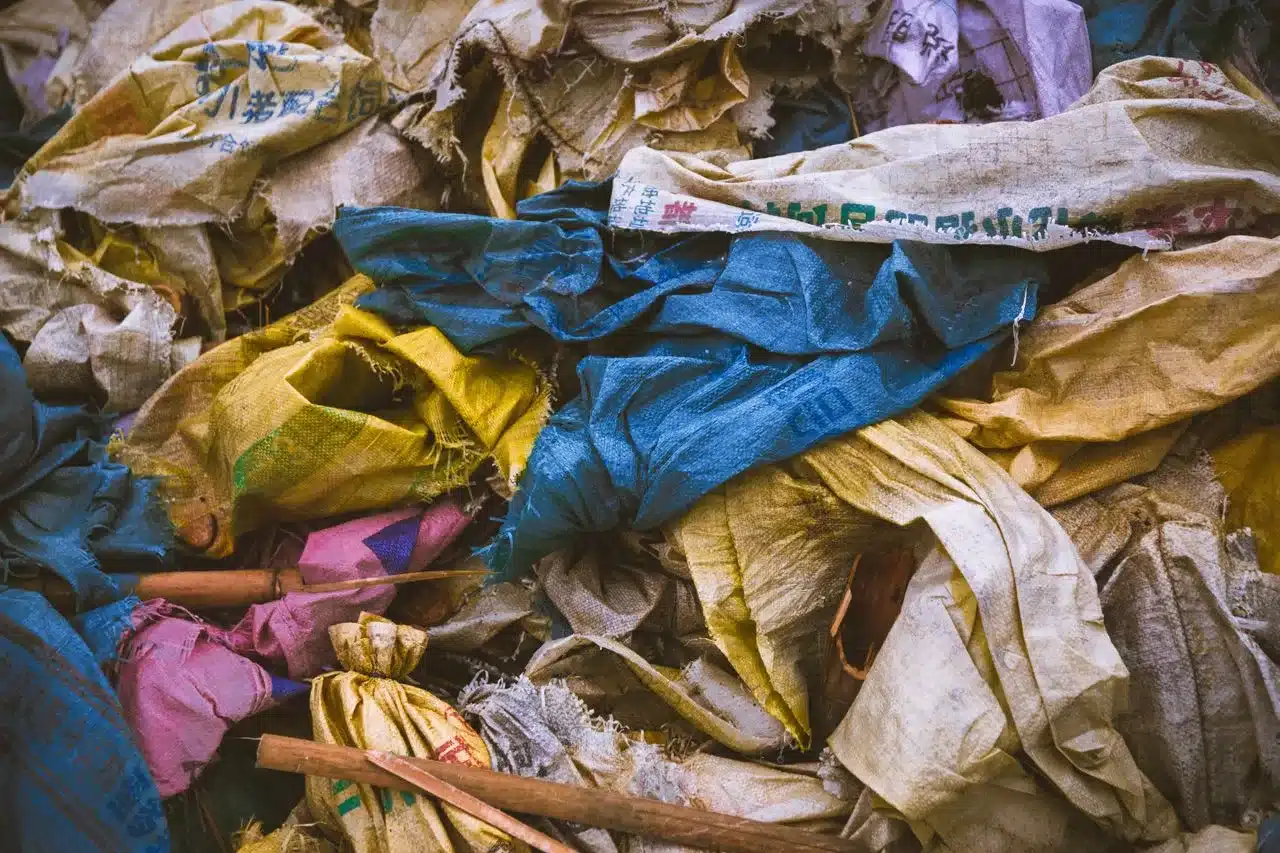
When the material is confirmed to be PP and suitable for recycling, it can be processed through a PP recycling and pelletizing line.
What Is a Non Woven Fabric Recycling Machine?
A non woven fabric máy tái chế is a recycling system designed to process suitable non-woven fabric waste into reusable plastic material.
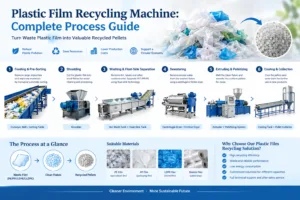
The actual machine configuration depends on the polymer and condition of the waste. For PP non-woven fabric, a typical system may include material feeding, shredding or crushing, compaction, extrusion, vacuum degassing, melt filtration, pelletizing, cooling, drying, and pellet collection.
The purpose of the recycling machine is to transform plastic waste into a more manageable and reusable form.
For PP non-woven fabric, the recycling process can be summarized as:
PP Non-Woven Fabric Waste → Size Reduction → Compaction → Melting → Filtration → Pelletizing → Recycled PP Pellets
A complete recycling line can be customized according to the customer’s raw material and required output.
Is Non Woven Fabric Be Recyclable?
Yes, suitable non-woven fabric can be recycled, but the recycling process depends on its polymer composition and contamination level.
PP non-woven fabric is suitable for mechanical recycling when the material is properly sorted and processed. Clean production scrap and edge trim are generally easier to recycle than heavily contaminated waste.
Before selecting a recycling machine, the following factors should be checked:
Polymer type
Material purity
Moisture content
Mức độ ô nhiễm
Material form
Required capacity
Required pellet quality
Final application
For example, PP non-woven fabric and PET non-woven fabric should not automatically be processed through the same recycling configuration simply because both materials are classified as non-woven fabric.
What Types of Non Woven Fabric Can Be Recycled?
Different types of non-woven fabric can be recycled depending on their polymer composition and condition.
For a PP recycling and pelletizing line, common recyclable PP non-woven waste includes:
PP Non-Woven Fabric Rolls
Large rolls and production rolls can be cut or shredded before entering the recycling process.
Edge Trim and Cutting Waste
Edge trim and cutting waste generated during production are often suitable for direct recycling after appropriate size reduction.
PP Non-Woven Bags
Rejected or defective PP non-woven bags can be recycled when they are made from suitable PP material.
Production Scrap
Clean production scrap is generally easier to process because it has relatively low contamination.
Printed PP Non-Woven Fabric
Printed material can also be recyclable, but the type of printing ink, volatile content, and required pellet quality should be considered. Vacuum degassing and appropriate melt filtration may be required.
Other Post-Industrial PP Waste
Other PP-based non-woven production waste can be evaluated according to its material composition and contamination level.
How Does Non Woven Fabric Recycling Machine Work?
A typical PP non-woven fabric recycling and pelletizing process is:
Feeding → Shredding/Crushing → Compaction → Extrusion → Vacuum Degassing → Melt Filtration → Pelletizing → Cooling → Drying → Collection
1. Feeding
The non-woven fabric waste is introduced into the recycling system through a conveyor or feeding system.
Because non-woven fabric is lightweight and has a relatively low bulk density, stable feeding is important for maintaining a consistent extrusion rate.
2. Crushing
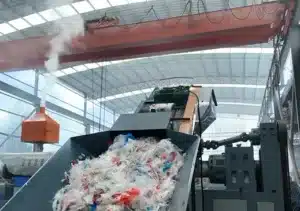
Large rolls, sheets, bags, and offcuts can be reduced to a suitable size before extrusion.
A crusher or shredder can improve material handling and make the downstream feeding process more stable.
3. Compaction
Lightweight PP non-woven fabric can be difficult to feed consistently because of its low bulk density.
A compactor can cut, agitate, heat, and densify the material before it enters the extruder.
This reduces the material volume and improves feeding stability.
4. Extrusion
The prepared PP material enters the extruder.
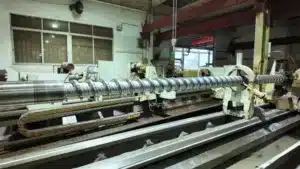
Inside the extruder, the material is heated, melted, mixed, and conveyed by the screw.
The extruder configuration can be selected according to:
Material characteristics
Required capacity
Screw diameter
Screw L/D ratio
Công suất động cơ
Screw design
Required degassing
Chất lượng viên nén thành phẩm
5. Vacuum Degassing
During extrusion, moisture and volatile substances can be released from the material.
A vacuum degassing system removes gases and volatile components from the molten PP.
This can be particularly useful when processing material containing moisture, printing ink, or other volatile substances.
6. Melt Filtration
After melting and degassing, the molten PP passes through a melt filtration system.
The filter removes solid contaminants that remain in the molten plastic.
Depending on the contamination level, the system may use a hydraulic screen changer or an automatic melt filtration system.
7. Pelletizing
After filtration, the molten PP is converted into recycled pellets.
Depending on the material and required pellet characteristics, the line can use different pelletizing methods, such as water-ring pelletizing or strand pelletizing.
8. Cooling and Drying
The pellets are cooled after pelletizing.
For water-based pelletizing systems, a drying system removes surface water from the pellets before collection.
9. Collection
The finished recycled PP pellets are collected in a silo, hopper, or bagging system.
The pellets can then be stored, transported, or used as recycled raw material for suitable plastic processing applications.
What Equipment Is Used in a Non Woven Fabric Recycling Machine?
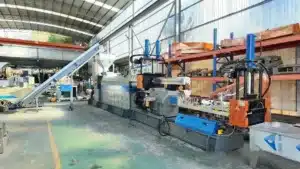
A typical PP non-woven fabric recycling and pelletizing line may include:
| Processing Section | Thiết bị | Main Function |
|---|---|---|
| Feeding | Belt Conveyor / Feeding System | Transfers raw material |
| Size Reduction | Crusher / Shredder | Reduces material size |
| Densification | Compactor | Increases material bulk density |
| Extrusion | PP Recycling Extruder | Melts and homogenizes PP |
| Degassing | Vacuum Degassing System | Removes gases and volatile substances |
| Filtration | Hydraulic / Automatic Screen Changer | Removes solid contaminants |
| Quá trình tạo viên | Water-Ring / Strand Pelletizer | Converts molten PP into pellets |
| Cooling | Cooling System | Cools the pellets |
| Sấy khô | Centrifugal Dryer | Removes surface water |
| Collection | Silo / Bagging System | Collects finished pellets |
Not every project requires all of these machines. A suitable configuration should be selected according to the actual material.
How Does the PP Pelletizing Process Work?
The PP pelletizing process converts recycled PP material into uniform pellets that can be stored and reused in downstream plastic processing.
After the PP non-woven fabric is prepared and densified, it enters the extruder. The plastic is melted and homogenized before passing through the filtration system.
The filtered molten PP is then transferred to the pelletizing system.
The basic process is:
PP Waste → Compaction → Extrusion → Vacuum Degassing → Melt Filtration → Pelletizing → Cooling → Drying → Recycled PP Pellets
The final pellet size, shape, filtration level, and processing conditions can be selected according to the intended application.
What Is the Difference Between a Non Woven Fabric Recycling Machine and a Pelletizing Line?
The PP non-woven fabric recycling machine can refer to individual equipment or a complete recycling system, depending on the manufacturer and application.
A PP non-woven fabric pelletizing line normally refers to a complete system designed to convert plastic waste into recycled pellets.
A complete PP non-woven fabric pelletizing line may include:
Feeding → Size Reduction → Compaction → Extrusion → Filtration → Pelletizing → Cooling → Drying
Therefore, when a customer searches for a non woven fabric recycling machine, they may actually be looking for a complete recycling and pelletizing solution rather than a single machine.
The correct configuration depends on the material and the customer’s required output.
How to Choose a Non Woven Fabric Recycling Machine?
Selecting a recycling machine based only on capacity can lead to an unsuitable configuration. The raw material should be evaluated first.
1. Confirm the Polymer
Determine whether the material is PP, PET, PE, PLA, or another polymer.
For a PP pelletizing line, the feedstock should primarily be PP.
2. Check the Material Form
The material may arrive as:
Rolls
Sheets
Bags
Edge trim
Offcuts
Shredded pieces
Different material forms may require different feeding and size-reduction systems.
3. Check Contamination
Identify whether the waste contains:
Dust
Paper
Kim loại
Labels
Mực in
Oil
Other plastics
Higher contamination levels may require additional pretreatment or stronger melt filtration.
4. Check Moisture
Moisture can affect extrusion stability and recycled pellet quality.
The appropriate vacuum degassing and drying configuration depends on the actual moisture level.
5. Determine Required Capacity
The recycling line can be designed according to the required output, such as:
300 kg/h
500 kg/giờ
800 kg/h
1000 kg/h
The complete system should be balanced so that the feeding, compaction, extrusion, filtration, pelletizing, cooling, and collection sections can operate continuously.
6. Define the Final Application
The required pellet quality depends on how the recycled PP pellets will be used.
For example, material intended for injection molding may have different requirements from material intended for extrusion or non-woven fabric production.
Can Different Non Woven Fabric Materials Be Mixed?
Different polymers should not automatically be mixed together in the same recycling process.
PP, PET, PE, PVC, PLA, and other polymers have different melting temperatures, processing characteristics, and compatibility.
For example, PP and PET non-woven fabrics have significantly different processing characteristics. If they are mixed, the resulting recycled material may have inconsistent properties and limited applications.
For a PP non-woven fabric recycling line, it is preferable to use controlled PP feedstock.
Particular attention should also be paid to PVC contamination, because PVC can create processing and quality problems when mixed with PP.
If the customer’s waste contains multiple polymers, material sorting or a different recycling configuration may be required.
What Determines the Quality of Recycled Pellets?
The quality of recycled PP pellets depends on several factors.
Raw Material Quality
Clean and consistent PP feedstock provides more stable recycling results.
Polymer Purity
Incompatible polymers can affect the properties and processing behavior of recycled PP.
Contamination Level
Dust, paper, metal, organic material, and other contaminants need to be controlled through sorting, pretreatment, and melt filtration.
Độ ẩm
Excess moisture can cause unstable extrusion and may result in bubbles or other pellet quality problems.
Vacuum Degassing
Proper degassing helps remove moisture, trapped gases, and volatile substances from the molten PP.
Melt Filtration
The filtration system should be selected according to the contamination level and final pellet requirements.
Extrusion Conditions
Extrusion temperature, screw configuration, residence time, and output should be matched to the material.
Pelletizing Conditions
Stable pelletizing conditions help maintain consistent pellet size and shape.
Applications of Recycled PP Pellets
The application of recycled PP pellets depends on their properties and quality.
Potential applications include:
Plastic injection molding
Plastic extrusion
Non-woven fabric production
Packaging-related products
Industrial plastic products
General plastic products
Other suitable PP applications
The recycled pellets should be evaluated or tested according to the requirements of the intended application before being introduced into production.
PP Non Woven Fabric Recycling and Pelletizing Solution
HuaZhao Machinery designs and manufactures plastic recycling and pelletizing systems for PP and other thermoplastic materials.
For PP non-woven fabric waste, the system can be configured with:
Feeding → Size Reduction → Compaction → Extrusion → Vacuum Degassing → Melt Filtration → Pelletizing → Cooling → Drying → Collection
The configuration can be customized according to:
PP non-woven fabric type
Raw material form
Required capacity
Mức độ ô nhiễm
Moisture content
Required pellet quality
Final pellet application
For example, lightweight PP non-woven fabric may require a compaction system to improve feeding stability, while heavily contaminated material may require a more advanced melt filtration system.
Before recommending a recycling line, the raw material should be evaluated based on its composition and processing characteristics.