High-Density Polyethylene (HDPE) is one of the most versatile and widely used plastics in the world. Known for its excellent strength, durability, chemical resistance, and cost-effectiveness, HDPE has become an essential material across numerous industries. It is commonly used in the production of bottles, containers, pipes, plastic pallets, crates, household products, industrial packaging, and many other applications.
As global plastic consumption continues to grow, the recycling of HDPE has become increasingly important. Millions of tons of HDPE products reach the end of their service life every year, creating both environmental challenges and valuable recycling opportunities. Unlike many other materials, HDPE can be recycled multiple times and converted into high-quality recycled plastic pellets that can be reused in manufacturing new products.
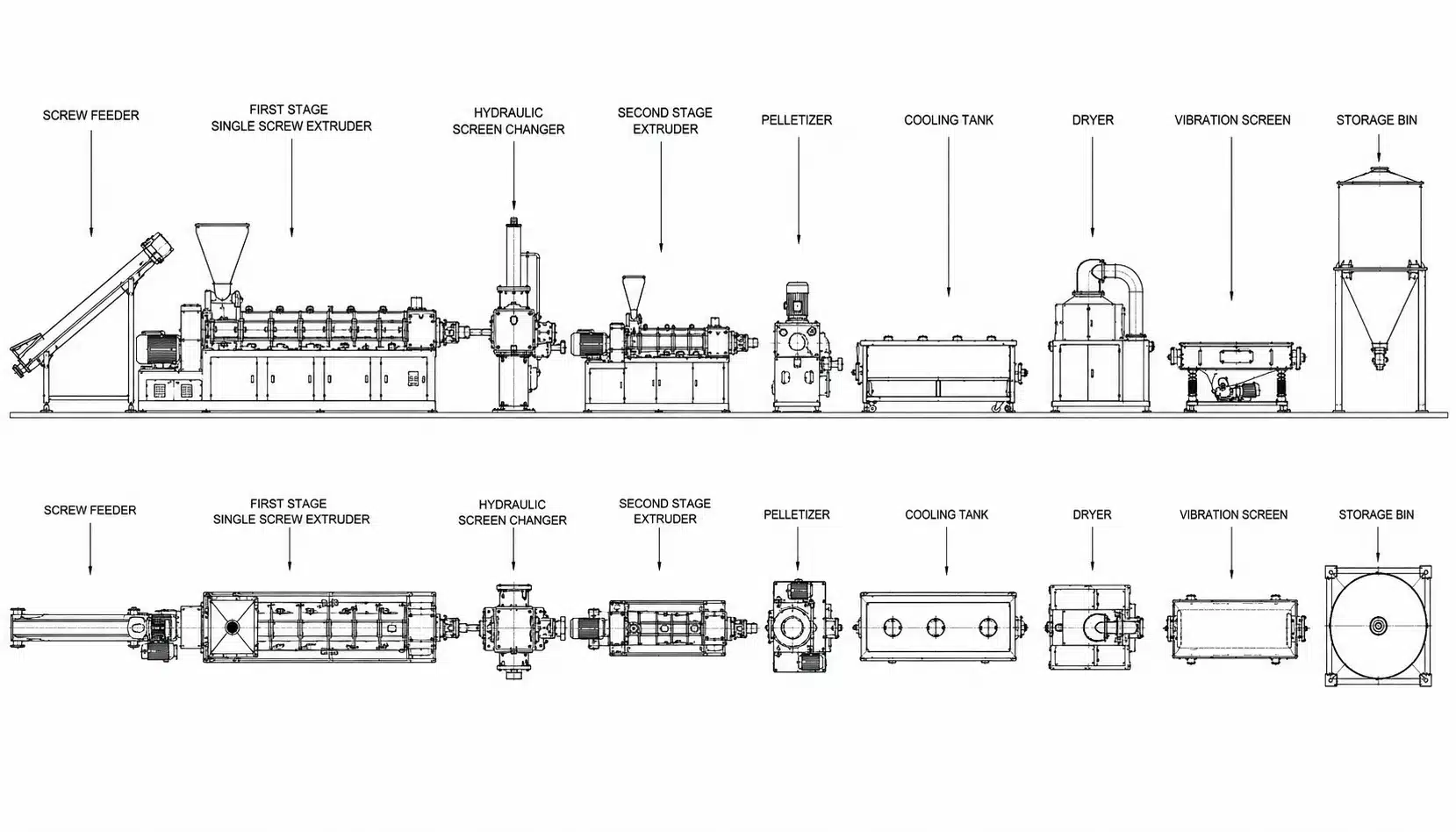
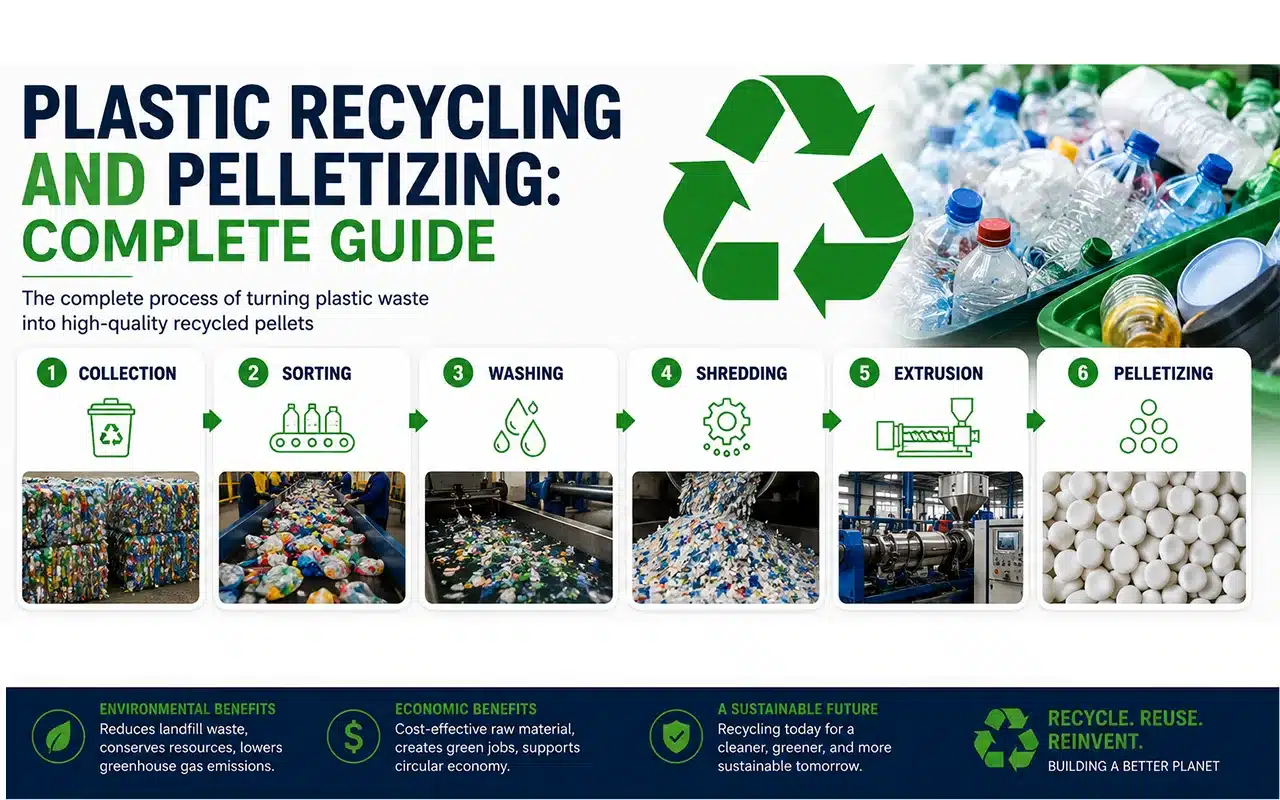
The HDPE recycling process typically involves collection, sorting, washing, shredding, melting, filtration, extrusion, and pelletizing. Modern HDPE recycling and pelletizing systems help transform post-consumer and post-industrial plastic waste into valuable raw materials while reducing landfill waste and conserving natural resources. Recycled HDPE pellets are widely used in the production of pipes, containers, construction materials, injection-molded products, and various industrial applications.
In this guide, we will explore what HDPE is, its common applications, the differences between HDPE and LDPE, whether HDPE can be recycled, how the HDPE recycling process works, and the equipment required to produce high-quality recycled HDPE pellets efficiently.