목차
플라스틱 펠릿화 라인: 플라스틱 재활용에 관한 종합 가이드
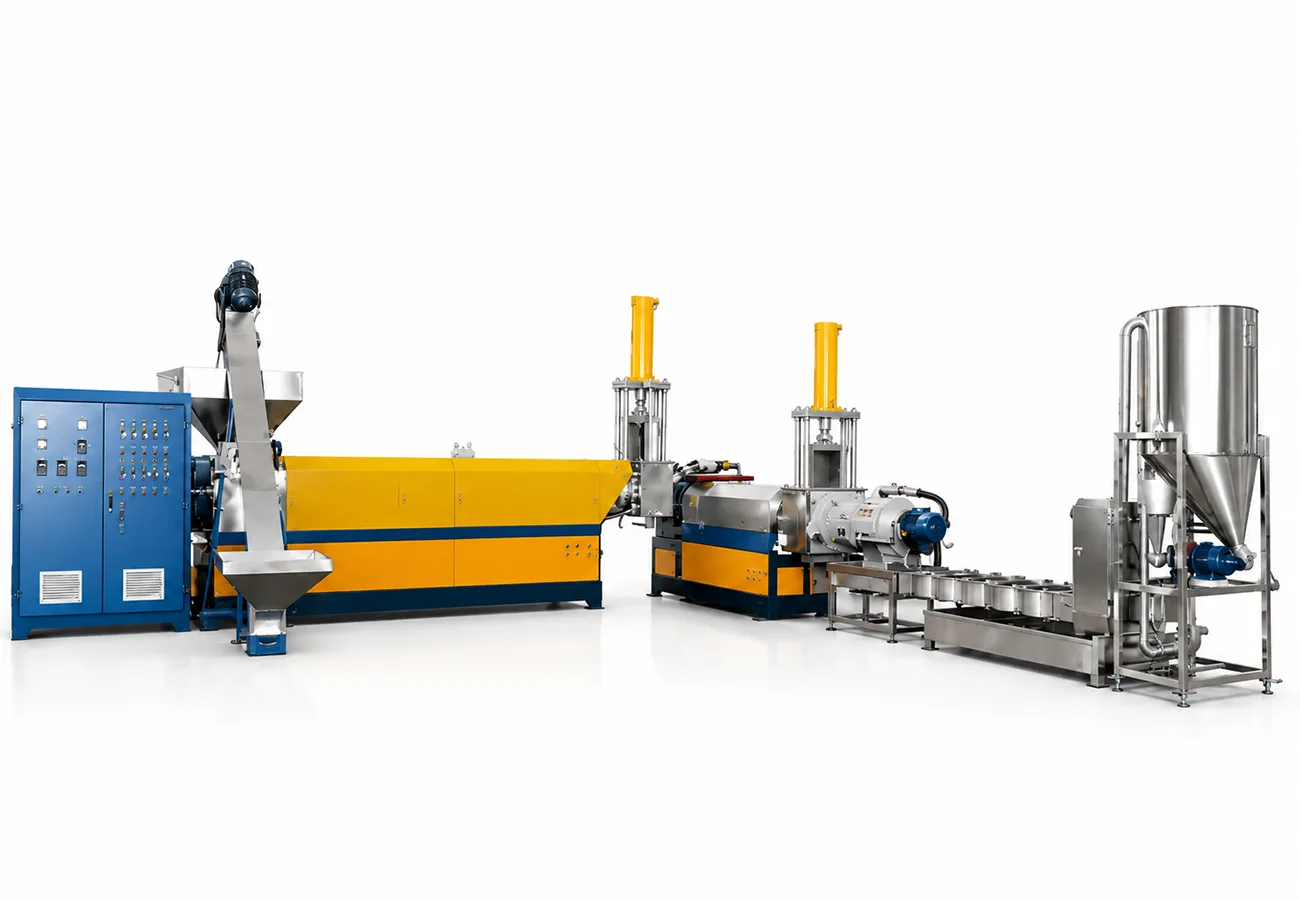
A 플라스틱 펠릿화 라인 is an integrated recycling system designed to convert plastic waste, flakes, film, or production scrap into uniform recycled plastic pellets. Depending on the material and feedstock condition, a complete line can include material preparation, feeding, extrusion, melt filtration, pelletizing, cooling, drying, and pellet collection.
For recycling plants, choosing the right pelletizing line is about more than selecting an extruder. The complete system needs to match the plastic type, feedstock condition, required capacity, contamination level, and final pellet application.
This guide explains how a plastic pelletizing line works, what equipment it can include, which materials can be processed, and what to consider when planning a plastic recycling project.
What Is a Plastic Pelletizing Line?
A plastic pelletizing line is a series of machines that work together to transform prepared plastic materials into recycled pellets.
Depending on the project, the process may start with plastic waste and include sorting, shredding, washing, and drying before the material reaches the extrusion system.
A typical process can be:
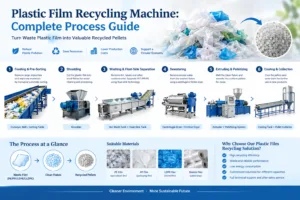
Plastic Waste → Sorting → Shredding → Washing → Drying → Feeding → Extrusion → Melt Filtration → Pelletizing → Cooling → Drying → Collection
However, not every recycling project requires all of these stages.
For example, clean production scrap may go directly into an extruder after size reduction, while dirty post-consumer plastic film may require a complete washing and drying system.
How Does a Pelletizing Line Work?
The main purpose of a pelletizing line is to process plastic material into a stable melt and then form that melt into uniform pellets.
The basic stages are:
Material preparation
Feeding
Plastic melting
Mixing and homogenization
Vacuum degassing
용융 여과
Die extrusion
펠릿화
Cooling
Pellet drying and collection
Each stage has a different function, and the configuration should be determined by the characteristics of the raw material.
Plastic Recycling Before Pelletizing
A pelletizing system normally works better when the incoming plastic has been properly prepared.
Plastic Sorting
Plastic waste may need to be separated according to:
Polymer type
Color
Material form
Contamination
수분
Foreign materials
Sorting is particularly important when processing post-consumer waste because different polymers can have different processing characteristics.
Wikipedia describes plastic recycling as the processing of plastic waste into other products and notes that mechanical recycling generally requires waste to be sorted by polymer type and color before processing.
Source: Wikipedia, Plastic recycling Wikipedia – Plastic recycling
Plastic Shredding and Crushing
Large plastic products need to be reduced to a suitable size before extrusion.
Depending on the feedstock, a recycling line may use:
Plastic shredder
Crusher
Granulator
Film cutter
Cutting mill
예를 들어:
HDPE drums → Shredding → HDPE flakes
or:
PP woven bags → Shredding → PP flakes
The objective is to produce a more consistent feedstock for the downstream equipment.
Plastic Washing
Washing is normally required when plastic contains significant amounts of:
Dirt
Sand
Food residue
Oil
Labels
Organic contamination
A washing system may include friction washers, floating tanks, hot washing equipment, and other cleaning machines depending on the feedstock.
Clean industrial scrap may not require a washing stage.
Plastic Dewatering and Drying
After washing, plastic flakes or film usually contain residual water.
Mechanical dewatering and thermal drying can reduce moisture before extrusion.
For some materials, moisture control is particularly important because excessive moisture can affect extrusion stability and final pellet quality.
Plastic Pelletizing Extrusion Line
The extrusion section is the core of a plastic pelletizing extrusion line.
After preparation, the plastic is fed into the extruder, where the material is transported, heated, melted, mixed, and homogenized.
The general process inside the extruder is:
Feeding → Compression → Melting → Mixing → Homogenization → Filtration → Die
The screw design, barrel configuration, heating system, and operating conditions depend on the plastic being processed.
For PE and PP recycling, for example, the extrusion system is configured differently from a system designed for PVC or PET.
Feeding System
Stable feeding is essential for stable extrusion.
Rigid plastic flakes generally have a higher bulk density and can be fed relatively easily.
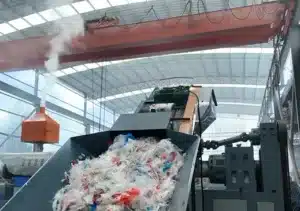
Plastic film is more challenging because it is lightweight and can bridge inside the hopper.
For low-density film, a cutter-compactor can be used to:
Increase bulk density
Improve feeding stability
Reduce material volume
Preheat the material
Reduce feeding problems
This is why a PE film recycling line can have a different feeding system from an HDPE rigid plastic pelletizing line.
압출기
The extruder melts and homogenizes the plastic material.
A recycling extruder normally consists of:
Screw
Barrel
Heating zones
Cooling system
Drive motor
기어박스
Temperature control
Pressure monitoring
The extruder must provide enough melting and mixing capability for the specific feedstock while maintaining stable processing conditions.
The required screw diameter and motor power depend on the target capacity and material characteristics.
Vacuum Degassing
Recycled plastic can contain moisture, air, and volatile substances.
A vacuum degassing system can help remove these substances during extrusion.
This can be particularly useful for materials such as:
Printed plastic film
Washed plastic flakes
Post-consumer plastic
Material containing residual moisture
The number of vacuum zones depends on the material and the requirements of the project.
Melt Filtration in a Pelletizing Line
Melt filtration is one of the most important stages in plastic recycling.
Even after sorting and washing, the material may contain small amounts of:
Paper
Aluminum
Dirt
Wood
Labels
Foreign polymers
Unmelted particles
The molten plastic therefore passes through a filtration system before entering the die head.
Common filtration systems include:
Hydraulic screen changer
Automatic screen changer
Continuous melt filter
Double-column screen changer
Laser-type filtration systems
For relatively clean industrial scrap, a conventional hydraulic screen changer may be sufficient.
For highly contaminated post-consumer material, an automatic or continuous filtration system can reduce production interruptions caused by frequent screen replacement.
Pelletizing Methods
After filtration, the clean plastic melt reaches the die head and is converted into pellets.
Different pelletizing lines can use different pelletizing technologies.
Strand Pelletizing
In strand pelletizing, molten plastic passes through holes in the die to form continuous strands.
The process is:
Die → Plastic Strands → Water Cooling → Strand Cutter → Pellets
The cooled strands are pulled into a strand pelletizer and cut into small pellets.
Strand pelletizing is widely used for different recycled plastics and can provide good control over pellet size.
Wikipedia defines pelletizing as the process of compressing or molding a material into the shape of a pellet.
Source: Wikipedia, 펠릿화 Wikipedia – Pelletizing
Die-Face Pelletizing
With die-face pelletizing, the molten plastic is cut close to the die surface.
The pellets are then cooled and transported to the collection system.
This design can provide a compact continuous pelletizing system.
Underwater Pelletizing
Underwater pelletizing cuts the molten polymer directly in a water environment.
It can produce relatively uniform pellets and is used in applications where pellet shape and continuous automatic operation are important.
The most suitable pelletizing method depends on:
Material type
Melt properties
용량
Pellet size
Required pellet quality
Production conditions
Which Plastics Can a Plastic Pelletizing Line Process?
A properly configured 플라스틱 펠릿화 라인 can process many types of thermoplastic materials.
PE Pelletizing
PE is one of the most common materials used in recycling.
Typical feedstocks include:
LDPE film
LLDPE film
HDPE flakes
PE containers
PE pipes
Industrial PE scrap
The system configuration depends strongly on whether the feedstock is flexible film or rigid plastic.
PP Pelletizing
PP recycling applications include:
PP 직조 봉투
PP 라피아
PP containers
PP automotive scrap
PP production waste
PP flakes
Clean PP production scrap can require a relatively simple extrusion system, while contaminated post-consumer PP may require additional preparation and filtration.
HDPE Pelletizing
HDPE can be recovered from:
Bottles
Drums
Containers
Pipes
Injection-molded products
Industrial scrap
Clean HDPE flakes can generally be processed through an extrusion pelletizing system after suitable size reduction.
PET Pelletizing
PET flakes are another important recycling feedstock.
Typical PET materials include:
PET bottle flakes
PET sheet
PET production scrap
PET recycling requires careful control of material cleanliness and moisture. Depending on the desired recycled material quality, specialized drying and extrusion configurations may be required.
PVC Pelletizing
PVC has different processing characteristics from PE and PP.
PVC pelletizing applications may include:
PVC pipe scrap
PVC profiles
Cable materials
PVC production waste
Temperature control and screw configuration should therefore be selected specifically for the PVC material.
Pelletizing Line for Different Feedstocks
One of the most important points in recycling system design is that the same pelletizer line is not necessarily suitable for every type of feedstock.
Clean Production Scrap
A relatively clean material may follow:
Production Scrap → Crushing → Feeding → Extrusion → Filtration → Pelletizing → Cooling
This is one of the simpler configurations.
Washed Plastic Flakes
For washed flakes, the process can be:
Plastic Waste → Sorting → Crushing → Washing → Dewatering → Drying → Extrusion → Filtration → Pelletizing
This configuration is commonly used for recycled PE and PP flakes.
Plastic Film
Film recycling may require:
Waste Film → Sorting → Shredding → Washing → Dewatering → Drying → Compaction → Extrusion → Filtration → Pelletizing
Because film has a low bulk density, feeding and moisture removal are important parts of the system design.
Single-Stage and Two-Stage Pelletizing Lines
The extrusion configuration is another important consideration.
Single-Stage System
A single extruder performs the primary melting, mixing, and homogenization.
It can be suitable for:
Clean industrial scrap
Relatively clean flakes
Stable feedstock
Applications with moderate contamination
Advantages can include:
Compact layout
Lower equipment investment
더 간편한 조작
Easier installation
Two-Stage System
A two-stage extrusion system provides additional processing space for melting, mixing, and degassing.
It can be useful for:
Highly printed film
Contaminated plastic
Difficult feedstocks
Materials requiring stronger homogenization
Applications requiring improved melt quality
The more complex system is not automatically better. The correct configuration depends on the actual material.
What Determines Pelletizing Line Capacity?
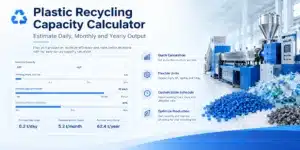
Capacity is usually measured in kg/h.
Common project requirements include:
200–300 kg/h
300–500 kg/h
500–800 kg/h
800–1,000 kg/h
More than 1,000 kg/h
However, the nominal capacity of an extruder does not always represent the actual output of a complete recycling system.
Actual production can be influenced by:
Polymer type
Material bulk density
수분
Contamination
Feedstock size
Screw design
Filtration requirements
Processing temperature
펠릿화 방법
For example, processing 500 kg/h of dense HDPE flakes is very different from processing 500 kg/h of low-density PE film.
What Equipment Is Included in a Pelletizing Line?
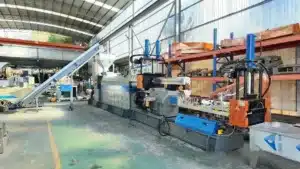
A complete system can include different combinations of equipment.
| Process | Typical Equipment |
|---|---|
| Sorting | Sorting table / optical sorting |
| Size reduction | Shredder / crusher / granulator |
| 세탁 | Friction washer / float tank / hot washer |
| Dewatering | Centrifugal dewatering machine |
| 건조 | Thermal dryer / squeeze dryer |
| Feeding | Conveyor / hopper / screw feeder |
| Densifying | Cutter-compactor |
| Extrusion | Single-screw / twin-screw extruder |
| Degassing | Vacuum system |
| Filtration | Hydraulic / automatic screen changer |
| Forming | Die head |
| 펠릿화 | Strand / die-face / underwater pelletizer |
| Cooling | Water cooling system |
| 건조 | Pellet dryer |
| Collection | Pellet silo / collection system |
| Packing | Bagging system |
The final equipment list should be based on the raw material rather than using the same configuration for every customer.
How to Choose the Right Pelletizer Line
Before purchasing a pelletizer line, define the following information.
재료 유형
Specify the primary polymer:
PE
PP
HDPE
LDPE
PET
PVC
ABS
PS
Feedstock Form
The supplier should know whether the material is:
Film
Flakes
Bottles
Bags
Woven sacks
Pipes
Sheets
Injection scrap
Production waste
Contamination Level
Provide information about:
Dirt
수분
Paper
금속
Organic material
Other plastics
Photos and videos of the actual feedstock can also help when evaluating the required configuration.
Required Capacity
State the desired output in kg/h and, if possible, the expected daily production.
Capacity should be considered together with the material type and feedstock condition.
Final Application
The final pellets may be used for:
Injection molding
Film extrusion
Blow molding
Pipe production
Sheet extrusion
Profile extrusion
Compounding
Other recycled plastic products
The end application helps determine the required pellet quality and filtration level.
Plastic Pelletizing Line Cost Factors
There is no single standard price for a complete plastic pelletizing line.
The investment depends on:
Material type
용량
Feedstock condition
Washing requirements
건조 요건
Extruder configuration
Screw diameter
모터 출력
Filtration system
Pelletizing technology
자동화 수준
Auxiliary equipment
Installation requirements
For example, two 500 kg/h lines can have significantly different configurations if one processes clean PP production scrap and the other processes dirty post-consumer PE film.
Therefore, comparing only the equipment price may not provide a complete picture of the investment.
How to Compare Different Pelletizing Lines
When evaluating different pelletizing lines, buyers should look beyond the nominal capacity and equipment list.
Consider:
1. Feedstock Compatibility
Can the line process your actual material consistently?
2. Actual Production Capacity
Ask for expected output under your specific feedstock conditions.
3. Melt Filtration
Check the filtration method and the expected contamination level.
4. Pellet Quality
Consider pellet size, shape, cleanliness, moisture, and consistency.
5. Energy Consumption
Compare expected operating power rather than looking only at installed motor power.
6. Maintenance
Consider access to:
Screens
Cutting knives
Heating elements
베어링
Screw components
Wear parts
7. Technical Support
Installation, commissioning, operator training, spare parts, and after-sales support can be important for long-term operation.
Common Problems in Plastic Pelletizing Lines
Unstable Material Feeding
Possible causes include low bulk density, inconsistent material size, excessive film, or bridging in the hopper.
높은 수분 함량
Possible causes include inadequate dewatering, insufficient drying, or wet feedstock entering the extrusion system.
Frequent Screen Changes
This can happen when the incoming material contains excessive contamination or when the filtration system is not correctly matched to the feedstock.
Uneven Pellets
Possible causes include unstable melt pressure, incorrect die temperature, improper cooling, or incorrect cutting conditions.
Dark or Burnt Material
Potential causes include excessive temperature, excessive residence time, contamination, or unsuitable processing conditions.
Plastic Pelletizing Line for Recycling Plants
A 플라스틱 펠릿화 라인 can be used as the final processing section of a complete plastic recycling plant.
For example, a PE film recycling project may use:
Sorting → Shredding → Washing → Dewatering → Drying → Compaction → Extrusion → Melt Filtration → Pelletizing → Cooling → Drying → Packing
A cleaner PP production scrap project may use:
Size Reduction → Feeding → Extrusion → Filtration → Pelletizing → Cooling → Collection
This shows why recycling equipment should be designed around the actual raw material.
There is no universal pelletizing line that is ideal for every plastic recycling application.
Why Line Configuration Matters
The performance of a recycling system depends on how the individual machines work together.
A high-capacity extruder cannot compensate for poor material preparation. Likewise, a powerful shredder does not guarantee high-quality recycled pellets if the extrusion and filtration systems are incorrectly configured.
A properly designed system should balance:
Material Preparation + Feeding + Extrusion + Filtration + Pelletizing + Cooling + Drying
This integrated approach helps recycling plants achieve more stable production and consistent recycled pellet quality.
References
Source: Wikipedia, 펠릿화 Wikipedia – Pelletizing
Source: Wikipedia, Plastic recycling Wikipedia – Plastic recycling
Source: Wikipedia, Polymer degradation Wikipedia – Polymer degradation
Common Questions About Plastic Pelletizing Line
Q: What is a plastic pelletizing line?
A:
A plastic pelletizing line is an integrated system used to process plastic waste, flakes, film, or production scrap into recycled plastic pellets.
Q: What is the difference between a pelletizing line and a pelletizer line?
A:
In most industrial discussions, pelletizing line and pelletizer line refer to a similar integrated system. The terminology can vary between manufacturers and markets.
Q: What plastics can be processed by a plastic pelletizing line?
A:
Depending on the machine configuration, plastic pelletizing lines can process materials such as PE, PP, HDPE, LDPE, PET, PVC, ABS, and other thermoplastics.
Q: Does every plastic recycling line require washing?
A:
No. Clean production scrap may not require washing. Dirty post-consumer materials generally require washing and drying before extrusion.
Q:Can plastic film be processed by a pelletizing line?
A:
Yes. PE and other plastic films can be processed, but low-density film usually requires a suitable feeding and densification system to achieve stable extrusion.
Q: What capacity can a plastic pelletizing line produce?
A:
Capacity depends on the polymer, feedstock condition, screw configuration, filtration system, and other factors. Commercial recycling systems can range from a few hundred kilograms per hour to more than 1,000 kg/h.
Q: How do I choose the right pelletizing line?
A:
Start with the material type, feedstock form, contamination level, moisture, required capacity, and final pellet application. These parameters determine the appropriate equipment configuration.