1台のプラスチックペレット化機で、PPとPEの両方を処理することは可能ですか?
はい、スクリューの設計、温度設定、および加工条件が両方の材料に適していれば、1台のプラスチックペレット化機でポリプロピレン(PP)とポリエチレン(PE)の両方を加工することができます。.
ただし、単一の機械が最適な選択であるかどうかは、プラスチック廃棄物の種類、材料特性、求められるペレットの品質、および生産ラインでPPとPEを切り替える頻度によって異なります。.
PPとPEを別々の生産バッチで分別処理するプラスチックリサイクルプラントにおいては、適切に構成されたPP/PEペレット化ラインが、実用的かつ費用対効果の高い解決策となり得ます。しかし、検証済みの配合や相溶化プロセスを経ずにPPとPEを混合すると、ペレットの品質にばらつきが生じたり、機械的特性が低下したりする恐れがあります。.
このガイドでは、1台のペレット化装置で2種類の原料を処理する方法、必要となる可能性のある技術的な調整、原料を安全に切り替える方法、および専用装置への投資がより適切となる場合について解説します。.
プラスチックのペレット化において、PPとPEの違いは何ですか?
PPとPEはいずれもポリオレフィンであるため、加工特性には共通点があります。しかし、溶融挙動、メルトフロー特性、および加工要件は、具体的な樹脂グレードによって異なります。.
| プロパティ | ポリプロピレン(PP) | ポリエチレン(PE) |
|---|---|---|
| 一般的な再生素材 | 織物バッグ、硬質容器、射出成形部品 | PEフィルム、包装用フィルム、ボトル、パイプ、および容器 |
| 代表的な融点範囲 | 一般的なグレードの場合、約130~170°C | 一般的なグレードの場合、約105~135°C |
| メルトフロー特性 | グレード、分子量、および加工履歴によって異なります | グレード、分子量、および加工履歴によって異なります |
| 処理に関する留意点 | 温度と滞留時間を制御して劣化を抑制する | 供給、溶融、圧力、および熱履歴を制御する |
| 一般的なペレット化用途 | 射出成形および押出成形用の再生PPペレット | フィルム押出成形、成形、およびその他の用途向けのリサイクルPEペレット |
Note: These are approximate material characteristics, not universal machine operating temperatures. Actual melting behavior and processing temperatures depend on the resin grade, contamination, moisture, additives, screw design and ペレット化システム.
なぜPPとPEでは異なる加工条件が必要となるのでしょうか?
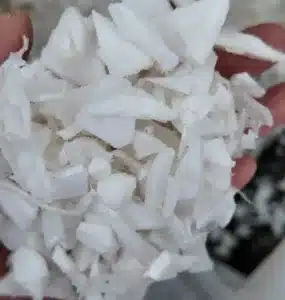
PEフレーク

PPフレーク
まず、それらの融解挙動が異なります。. PPは一般的に、一般的なPEグレードよりも融点が高い。しかし、安定した押出成形に必要な温度は、融点だけで決まるわけではない。必要なバレル温度やダイ温度は、粘度、せん断加熱、および生産スループットにも左右される。.
第二に、それらの溶融流動特性にはばらつきがある。. PPには、溶融流動率が高いグレードもあれば、粘度が高めのグレードもあります。PEについても同様です。ポリマーの名称だけに頼るのではなく、実際に加工する材料に合わせて機械を設定する必要があります。.
第三に、それらの熱履歴が重要となります。. 再生PPおよびPEは、複数の加熱サイクルを経ている可能性があります。過度な温度や長時間の滞留は、劣化、変色、異臭、および機械的性能の低下を引き起こす可能性があります。.
こうした理由から、共用ペレタイザーは、実際の原料や求められる製品の品質に基づいて評価すべきである。.
1台のペレタイザーで、PPとPEを別々に処理することは可能ですか?
はい。押出システムが両方の材料に対応していれば、1台の機械でPPとPEを別々の生産ロットとして処理することができます。.
特に重要な要素が3つあります。.
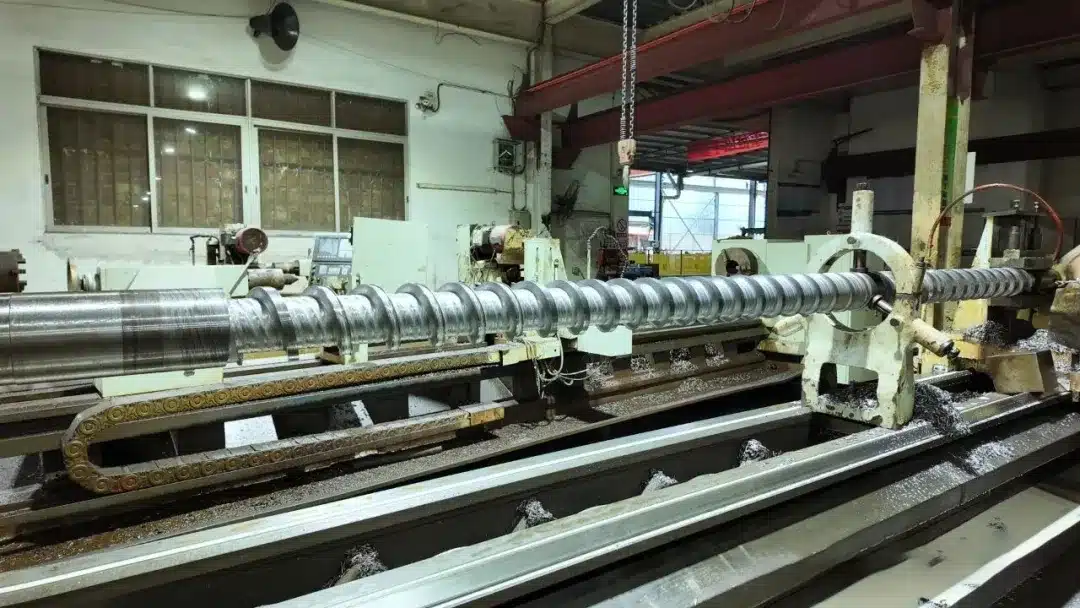
適切なネジの設計を選択する
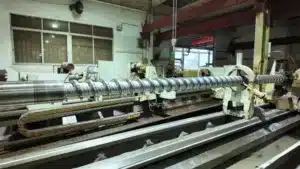
The screw is one of the most important components of a plastic pelletizing machine. It controls material conveying, melting, mixing and melt pressure.
特定の材料用に設計されたスクリューは、別の材料では最適な性能を発揮しない場合があります。特に、原料のメルトフローレートや物理的形態が著しく異なる場合にはそうです。.
PP/PE用途については、製造業者は以下の点を評価すべきである:
ねじの直径および長さ対直径比(L/D): これらは、処理能力、溶解能力、および滞留時間に影響を及ぼします。.
圧縮比とスクリューの形状: これらは、材料の締固め、溶融、および圧力の発生に影響を及ぼします。.
混合および均質化能力: これらは、溶融物の粘度や、添加剤や残留不純物の分布に影響を及ぼします。.
通気および脱ガスに関する要件: これらは、印刷済みフィルム、洗浄済みプラスチック、および水分や揮発性不純物を含む原料において特に重要です。.
適切に設計された汎用スクリューであれば、PPとPEの両方を効果的に処理できる。しかし、これら2つのポリマーのあらゆるグレードにおいて最適な性能を保証する、万能なスクリュー形状というものは存在しない。.
When requesting a quotation, provide the supplier with the PP and PE grades, feedstock forms, contamination levels, target capacity and required pellet quality. The manufacturer can then assess whether a shared screw configuration is appropriate or whether a customized design is needed.
バレルとダイの温度を調整する
PP and PE should not automatically be processed using identical temperature settings.
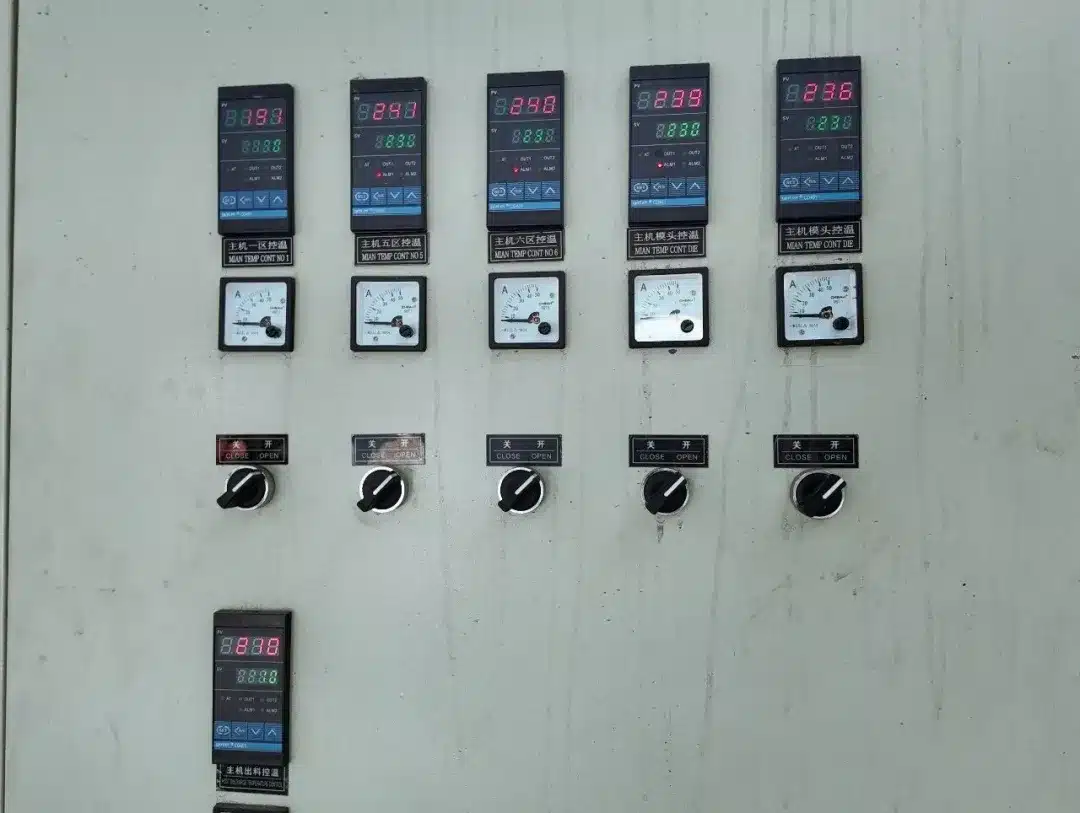
The operator should establish a suitable temperature profile for each material, including the feed zone, compression or melting zones, metering zone and die.
When switching from PE to PP, the machine may require higher set temperatures. When switching from PP to PE, lower settings may be appropriate. However, the exact adjustment must be determined by the actual resin grades and machine configuration.
Do not apply a fixed temperature increase or decrease, such as 15–20°C, to every PP/PE changeover. Such a rule may be unsuitable for some materials and could result in incomplete melting, overheating or unstable extrusion.
Instead, follow the manufacturer’s recommended processing window and monitor:
Actual melt temperature
Melt pressure and extrusion stability
Motor load and screw speed
Pellet appearance and consistency
Signs of degradation, smoke or abnormal odor
Temperature adjustments should be made in accordance with the machine manufacturer’s operating procedure.
給餌・切断・冷却システムの点検
The extruder is not the only component that determines whether a shared line will work well.
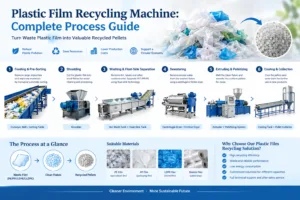
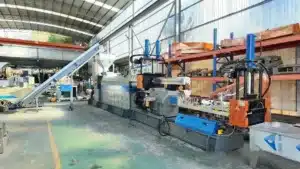
Depending on the feedstock, a PP/PE pelletizing line may include:
A plastic crusher or shredder for size reduction
A washing and drying system for contaminated materials
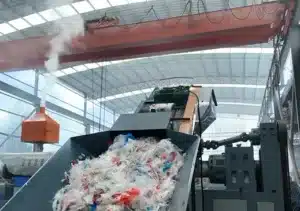
A forced-feeding system for lightweight films
An extrusion and filtration system
A strand-cutting, water-ring or other suitable pelletizing system
Cooling, dewatering and pellet conveying equipment
For example, rigid PP flakes and lightweight PE film may require different feeding arrangements even when they can be processed by the same extruder.
Similarly, the most suitable pelletizing method depends on the material form, melt characteristics, target output and desired pellet quality. A common extruder configuration does not necessarily mean every auxiliary component can be used without adjustment.
PPからPEへ、あるいはPEからPPへは、どのように切り替えるべきでしょうか?
When PP and PE are processed separately on the same machine, proper changeover procedures help reduce cross-contamination and unstable production.
手順 1:前の原料の供給を停止するか、隔離する
Follow the machine manufacturer’s shutdown or material-change procedure. Stop feeding the previous material as instructed and allow the remaining material to be processed or discharged safely.
Do not introduce the next batch until the changeover procedure permits it.
手順 2:押出機とダイを洗浄する
Residual polymer may remain inside the screw channels, barrel, screen changer and die.
Use a manufacturer-approved purging material or a suitable transition resin compatible with the equipment and both processing conditions. The correct purging material depends on the machine, resin grades and temperature limits.
Do not assume that LDPE, LLDPE or another low-cost recycled resin is automatically suitable for every changeover. An inappropriate purging material can introduce contamination or create additional processing problems.
Continue purging according to the manufacturer’s instructions and verify that the discharged melt is sufficiently consistent before beginning the next production batch.
ステップ3:処理パラメータを調整する
Set the temperature profile, screw speed, feeding rate and other operating parameters for the incoming material.
Allow the system to stabilize before increasing production to the target rate.
ステップ4:初期のペレットを点検する
Check the first pellets after the changeover for:
Color differences or visible contamination
Inconsistent pellet size or shape
Unstable extrusion or excessive pressure fluctuations
Abnormal odor or signs of thermal degradation
If the pellets do not meet the required quality standards, continue troubleshooting before releasing the batch for sale or further processing.
重要: Purging reduces residual material but does not guarantee complete removal. If the product requires strict color consistency, high purity or demanding mechanical properties, changeover validation and quality testing are particularly important.
PPとPEはペレット化の際に混合できますか?
Processing PP and PE separately on the same machine is different from feeding a mixture of PP and PE into the extruder.
Although both polymers belong to the polyolefin family, PP and PE generally have limited compatibility with each other. Their blends may exhibit phase separation and reduced mechanical performance, depending on the composition, grades and processing conditions.
Uncontrolled mixing can lead to:
Inconsistent tensile strength and impact resistance
Variable melt flow behavior
Poorer product consistency
Reduced suitability for applications requiring reliable mechanical properties
However, PP/PE blends are not universally unusable. Some products can be manufactured from mixed polyolefins when the formulation, compatibilizers and processing conditions have been specifically developed and validated.
For conventional recycling operations that require consistent PP or PE pellets, sorting and processing the two materials separately is generally the safer approach.
If your goal is to produce a mixed-polyolefin pellet rather than separate PP and PE products, tell the equipment supplier the expected PP/PE ratio, contamination level and final application. The line and formulation should be evaluated for that specific purpose.
1台の共用機械か、それとも2つの専用ペレタイジングラインか?
The best configuration depends on changeover frequency, output requirements, feedstock characteristics and the cost of downtime.
| Evaluation factor | One shared PP/PE line | Two dedicated lines |
|---|---|---|
| Initial equipment investment | Generally lower | Generally higher |
| Changeover time | Required between materials | Usually minimal for material changes |
| Cross-contamination risk | Requires effective purging and validation | Lower when each line is dedicated to one material |
| Production flexibility | Suitable for separate batches | Suitable for simultaneous production |
| High-volume continuous production | May be limited by changeovers | Often more suitable |
| Floor space and utilities | Usually lower overall | Usually higher overall |
どのような場合に、1台の機械が適切な選択肢となるのでしょうか?
A shared PP/PE pelletizing line may be suitable when:
PP and PE are processed in separate batches.
Material changeovers are relatively infrequent.
The feedstocks have compatible processing requirements.
The required pellet quality can be achieved with a shared screw and extrusion system.
The plant has sufficient time for purging, parameter adjustment and quality checks.
専用機はどのような場合に検討すべきか?
Separate PP and PE lines may be more appropriate when:
Both materials need to be processed every day with frequent changeovers.
Production demand is high and continuous operation is important.
The materials have significantly different forms or processing requirements.
Cross-contamination must be minimized.
The final products require strict specifications or consistent quality.
There is no universal changeover-frequency threshold that applies to every plant. The decision should be based on actual production hours, cleaning time, material losses, labor costs, rejected pellets and equipment investment.
How to Choose a PP/PE Plastic Pelletizing Machine
Before purchasing a machine that will process both materials, prepare the following information for the equipment manufacturer.
| Information required | What to specify |
|---|---|
| Material types | PP, LDPE, LLDPE, HDPE or other grades |
| Feedstock form | Woven bags, rigid flakes, film, pipes, containers or mixed scrap |
| Material condition | Washed or unwashed, moisture level, printing, labels and contamination |
| Target capacity | Required output in kg/h for each material |
| Pellet quality | Intended application, color, melt flow requirements and quality standards |
| Changeover frequency | How often the line switches between PP and PE |
| Pelletizing method | Strand cutting, water-ring cutting or another suitable system |
| Electrical requirements | Local voltage, frequency and phase |
| Downstream process | Film extrusion, injection molding, pipe extrusion or other applications |
Ask the supplier to confirm whether the proposed configuration can meet the required capacity for both materials. Rated output for PP should not automatically be assumed to equal rated output for PE.
For example, a line processing lightweight PE film may require a different feeding arrangement from one processing rigid PP flakes. The achievable capacity also depends on moisture, bulk density, contamination, screen mesh and final pellet specifications.
A well-matched configuration can help reduce unnecessary equipment investment while maintaining stable production and consistent recycled pellets.
HuaZhao Machinery社のPP/PEペレット化ソリューション
HuaZhao Machinery provides plastic recycling and pelletizing equipment for different types of post-industrial and post-consumer plastic waste.
For projects that need to process both PP and PE, the appropriate configuration depends on the feedstock, required capacity, washing requirements, pellet quality and production schedule.
A project evaluation may cover:
Screw and extruder configuration for the specified materials
Feeding and material preparation equipment
Melt filtration and degassing requirements
Pelletizing and cooling systems
Operating parameters and material changeover procedures
Capacity and product-quality requirements for each polymer
To help us recommend a suitable solution, provide your material photos or videos, material type, expected capacity in kg/h and required pellet application.
Contact HuaZhao Machinery to discuss a plastic pelletizing line for your PP and PE recycling project.