¿Puede una máquina de peletización de plástico procesar tanto PP como PE?
Yes, one plastic pelletizing machine can process both polypropylene (PP) and polyethylene (PE), provided that the screw design, temperature settings, and processing conditions are suitable for both materials.
However, whether a single machine is the best choice depends on the type of plastic waste, material properties, required pellet quality, and how frequently the production line switches between PP and PE.
For plastic recycling plants that process PP and PE separately in different production batches, a properly configured PP/PE pelletizing line can be a practical and cost-effective solution. However, mixing PP and PE together without a validated formulation or compatibilization process can result in inconsistent pellet quality and poor mechanical properties.
This guide explains how to process both materials on one pelletizing machine, what technical adjustments may be necessary, how to change materials safely, and when dedicated machines are a better investment.
What Is the Difference Between PP and PE in Plastic Pelletizing?
PP and PE are both polyolefins, so they share some processing characteristics. However, their melting behavior, melt flow properties, and processing requirements vary depending on the specific resin grade.
| Property | Polipropileno (PP) | Polyethylene (PE) |
|---|---|---|
| Common recycled materials | Woven bags, rigid containers, injection-molded parts | PE film, packaging film, bottles, pipes and containers |
| Typical melting range | Approximately 130–170°C for common grades | Approximately 105–135°C for common grades |
| Melt flow behavior | Depends on grade, molecular weight and processing history | Depends on grade, molecular weight and processing history |
| Processing considerations | Control temperature and residence time to limit degradation | Control feeding, melting, pressure and thermal history |
| Common pelletizing applications | Recycled PP pellets for injection molding and extrusion | Recycled PE pellets for film extrusion, molding and other applications |
Note: These are approximate material characteristics, not universal machine operating temperatures. Actual melting behavior and processing temperatures depend on the resin grade, contamination, moisture, additives, screw design and sistema de peletización.
Why Do PP and PE Require Different Processing Conditions?
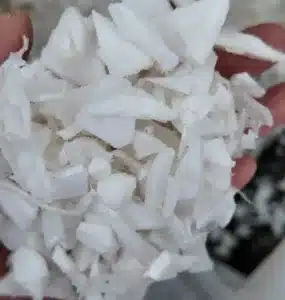
PE Flakes

PP Flakes
First, their melting behavior differs. PP generally has a higher melting point than common PE grades. However, the temperature required for stable extrusion is not determined by melting point alone. The required barrel and die temperatures also depend on viscosity, shear heating and production throughput.
Second, their melt flow properties vary. Some PP grades have high melt flow rates, while others are much more viscous. The same is true for PE. A machine must be configured for the actual materials being processed rather than relying on the polymer name alone.
Third, their thermal history matters. Recycled PP and PE may have experienced multiple heating cycles. Excessive temperature or prolonged residence time can cause degradation, discoloration, odor and reduced mechanical performance.
For these reasons, a shared pelletizing machine should be evaluated according to the actual feedstock and required output quality.
Can One Pelletizing Machine Process PP and PE Separately?
Yes. A single machine can process PP and PE in separate production batches when its extrusion system is suitable for both materials.
Three factors are particularly important.
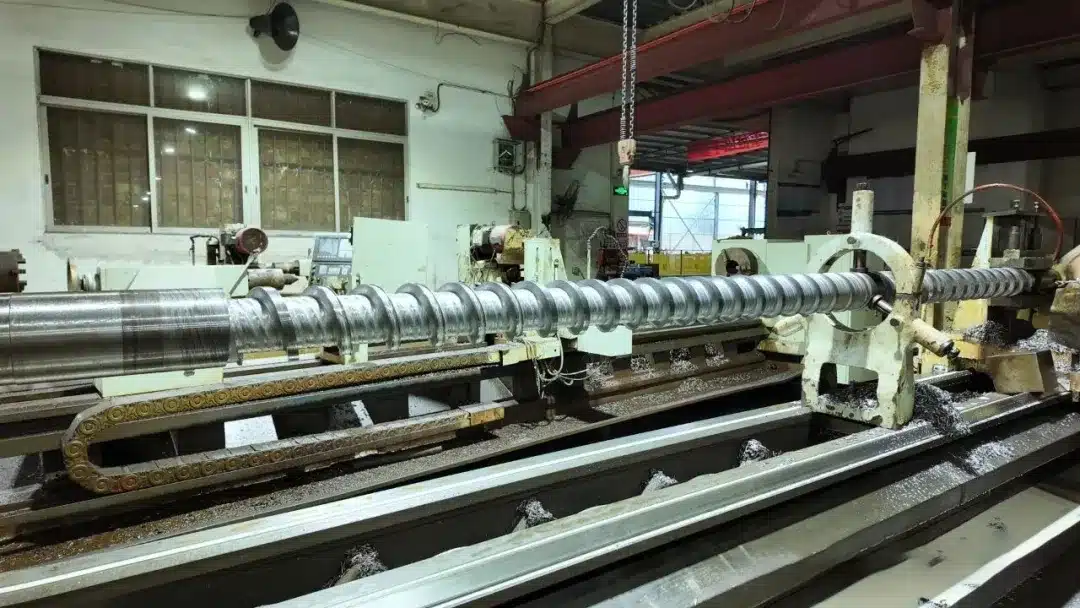
Select a Suitable Screw Design
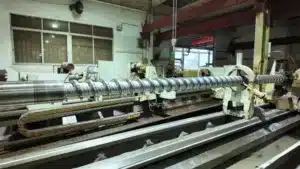
The screw is one of the most important components of a máquina de peletización de plástico. It controls material conveying, melting, mixing and melt pressure.
A screw designed for one specific material may not deliver the best performance with another material, especially when the feedstocks have substantially different melt flow rates or physical forms.
For PP/PE applications, the manufacturer should evaluate:
Screw diameter and length-to-diameter ratio (L/D): These affect throughput, melting capacity and residence time.
Compression ratio and screw geometry: These influence material compaction, melting and pressure development.
Mixing and homogenization capability: These affect melt consistency and the distribution of additives or residual contaminants.
Venting and degassing requirements: These are particularly important for printed films, washed plastics and feedstocks containing moisture or volatile contaminants.
A properly engineered general-purpose screw may handle both PP and PE effectively. However, there is no universal screw geometry that guarantees optimal performance for every grade of both polymers.
When requesting a quotation, provide the supplier with the PP and PE grades, feedstock forms, contamination levels, target capacity and required pellet quality. The manufacturer can then assess whether a shared screw configuration is appropriate or whether a customized design is needed.
Adjust Barrel and Die Temperatures
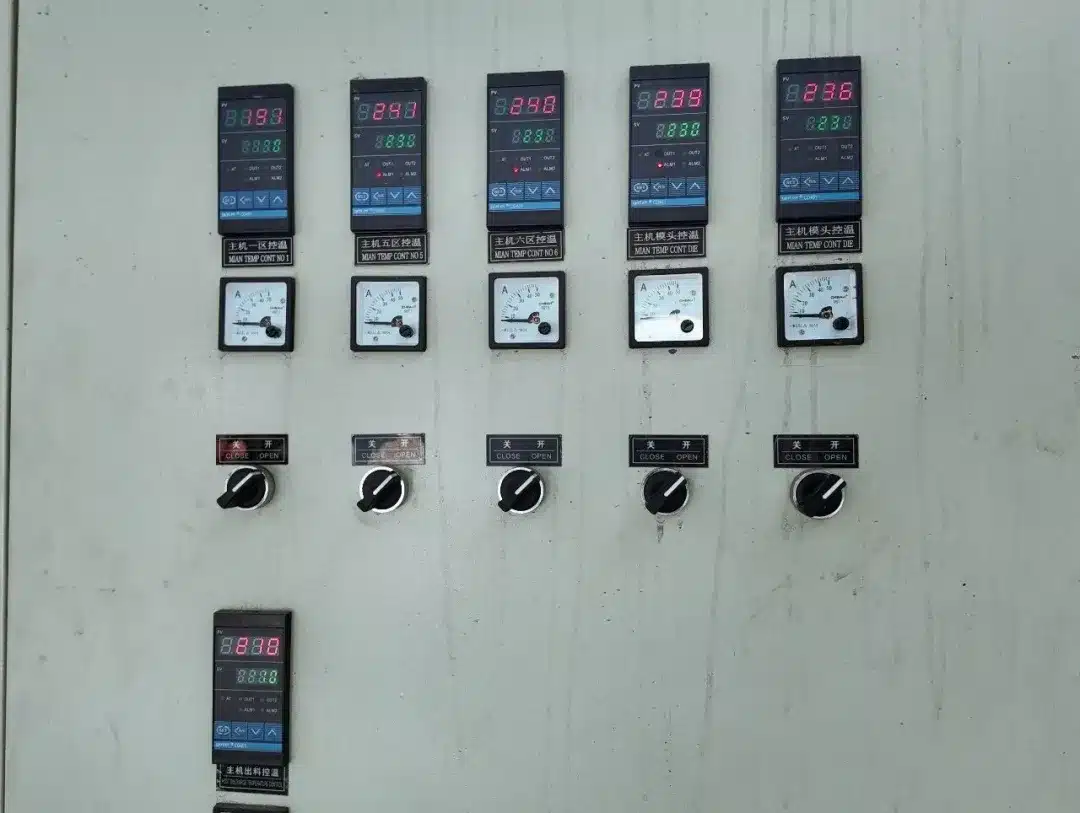
PP and PE should not automatically be processed using identical temperature settings.
The operator should establish a suitable temperature profile for each material, including the feed zone, compression or melting zones, metering zone and die.
When switching from PE to PP, the machine may require higher set temperatures. When switching from PP to PE, lower settings may be appropriate. However, the exact adjustment must be determined by the actual resin grades and machine configuration.
Do not apply a fixed temperature increase or decrease, such as 15–20°C, to every PP/PE changeover. Such a rule may be unsuitable for some materials and could result in incomplete melting, overheating or unstable extrusion.
Instead, follow the manufacturer’s recommended processing window and monitor:
Actual melt temperature
Melt pressure and extrusion stability
Motor load and screw speed
Pellet appearance and consistency
Signs of degradation, smoke or abnormal odor
Temperature adjustments should be made in accordance with the machine manufacturer’s operating procedure.
Check Feeding, Cutting and Cooling Systems
The extruder is not the only component that determines whether a shared line will work well.
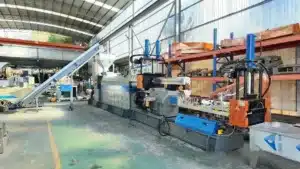
Depending on the feedstock, a PP/PE pelletizing line may include:
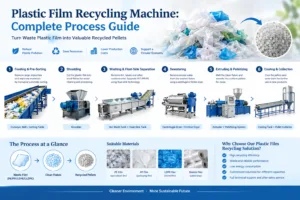
A plastic crusher or shredder for size reduction
A washing and drying system for contaminated materials
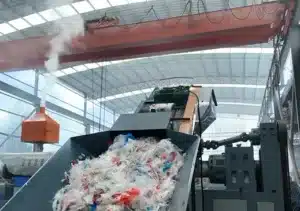
A forced-feeding system for lightweight films
An extrusion and filtration system
A strand-cutting, water-ring or other suitable pelletizing system
Cooling, dewatering and pellet conveying equipment
For example, rigid PP flakes and lightweight PE film may require different feeding arrangements even when they can be processed by the same extruder.
Similarly, the most suitable pelletizing method depends on the material form, melt characteristics, target output and desired pellet quality. A common extruder configuration does not necessarily mean every auxiliary component can be used without adjustment.
How Should You Change from PP to PE or PE to PP?
When PP and PE are processed separately on the same machine, proper changeover procedures help reduce cross-contamination and unstable production.
Step 1: Stop or Isolate the Previous Feedstock
Follow the machine manufacturer’s shutdown or material-change procedure. Stop feeding the previous material as instructed and allow the remaining material to be processed or discharged safely.
Do not introduce the next batch until the changeover procedure permits it.
Step 2: Purge the Extruder and Die
Residual polymer may remain inside the screw channels, barrel, screen changer and die.
Use a manufacturer-approved purging material or a suitable transition resin compatible with the equipment and both processing conditions. The correct purging material depends on the machine, resin grades and temperature limits.
Do not assume that LDPE, LLDPE or another low-cost recycled resin is automatically suitable for every changeover. An inappropriate purging material can introduce contamination or create additional processing problems.
Continue purging according to the manufacturer’s instructions and verify that the discharged melt is sufficiently consistent before beginning the next production batch.
Step 3: Adjust the Processing Parameters
Set the temperature profile, screw speed, feeding rate and other operating parameters for the incoming material.
Allow the system to stabilize before increasing production to the target rate.
Step 4: Inspect the Initial Pellets
Check the first pellets after the changeover for:
Color differences or visible contamination
Inconsistent pellet size or shape
Unstable extrusion or excessive pressure fluctuations
Abnormal odor or signs of thermal degradation
If the pellets do not meet the required quality standards, continue troubleshooting before releasing the batch for sale or further processing.
Important: Purging reduces residual material but does not guarantee complete removal. If the product requires strict color consistency, high purity or demanding mechanical properties, changeover validation and quality testing are particularly important.
Can PP and PE Be Mixed Together for Pelletizing?
Processing PP and PE separately on the same machine is different from feeding a mixture of PP and PE into the extruder.
Although both polymers belong to the polyolefin family, PP and PE generally have limited compatibility with each other. Their blends may exhibit phase separation and reduced mechanical performance, depending on the composition, grades and processing conditions.
Uncontrolled mixing can lead to:
Inconsistent tensile strength and impact resistance
Variable melt flow behavior
Poorer product consistency
Reduced suitability for applications requiring reliable mechanical properties
However, PP/PE blends are not universally unusable. Some products can be manufactured from mixed polyolefins when the formulation, compatibilizers and processing conditions have been specifically developed and validated.
For conventional recycling operations that require consistent PP or PE pellets, sorting and processing the two materials separately is generally the safer approach.
If your goal is to produce a mixed-polyolefin pellet rather than separate PP and PE products, tell the equipment supplier the expected PP/PE ratio, contamination level and final application. The line and formulation should be evaluated for that specific purpose.
One Shared Machine or Two Dedicated Pelletizing Lines?
The best configuration depends on changeover frequency, output requirements, feedstock characteristics and the cost of downtime.
| Evaluation factor | One shared PP/PE line | Two dedicated lines |
|---|---|---|
| Initial equipment investment | Generally lower | Generally higher |
| Changeover time | Required between materials | Usually minimal for material changes |
| Cross-contamination risk | Requires effective purging and validation | Lower when each line is dedicated to one material |
| Production flexibility | Suitable for separate batches | Suitable for simultaneous production |
| High-volume continuous production | May be limited by changeovers | Often more suitable |
| Floor space and utilities | Usually lower overall | Usually higher overall |
When Is One Machine a Good Choice?
A shared PP/PE pelletizing line may be suitable when:
PP and PE are processed in separate batches.
Material changeovers are relatively infrequent.
The feedstocks have compatible processing requirements.
The required pellet quality can be achieved with a shared screw and extrusion system.
The plant has sufficient time for purging, parameter adjustment and quality checks.
When Should You Consider Dedicated Machines?
Separate PP and PE lines may be more appropriate when:
Both materials need to be processed every day with frequent changeovers.
Production demand is high and continuous operation is important.
The materials have significantly different forms or processing requirements.
Cross-contamination must be minimized.
The final products require strict specifications or consistent quality.
There is no universal changeover-frequency threshold that applies to every plant. The decision should be based on actual production hours, cleaning time, material losses, labor costs, rejected pellets and equipment investment.
How to Choose a PP/PE Plastic Pelletizing Machine
Before purchasing a machine that will process both materials, prepare the following information for the equipment manufacturer.
| Information required | What to specify |
|---|---|
| Material types | PP, LDPE, LLDPE, HDPE or other grades |
| Feedstock form | Woven bags, rigid flakes, film, pipes, containers or mixed scrap |
| Material condition | Washed or unwashed, moisture level, printing, labels and contamination |
| Target capacity | Required output in kg/h for each material |
| Calidad de los pellets | Intended application, color, melt flow requirements and quality standards |
| Changeover frequency | How often the line switches between PP and PE |
| Método de peletización | Strand cutting, water-ring cutting or another suitable system |
| Electrical requirements | Local voltage, frequency and phase |
| Proceso posterior | Film extrusion, injection molding, pipe extrusion or other applications |
Ask the supplier to confirm whether the proposed configuration can meet the required capacity for both materials. Rated output for PP should not automatically be assumed to equal rated output for PE.
For example, a line processing lightweight PE film may require a different feeding arrangement from one processing rigid PP flakes. The achievable capacity also depends on moisture, bulk density, contamination, screen mesh and final pellet specifications.
A well-matched configuration can help reduce unnecessary equipment investment while maintaining stable production and consistent recycled pellets.
PP/PE Pelletizing Solutions from HuaZhao Machinery
HuaZhao Machinery provides plastic recycling and pelletizing equipment for different types of post-industrial and post-consumer plastic waste.
For projects that need to process both PP and PE, the appropriate configuration depends on the feedstock, required capacity, washing requirements, pellet quality and production schedule.
A project evaluation may cover:
Screw and extruder configuration for the specified materials
Feeding and material preparation equipment
Melt filtration and degassing requirements
Pelletizing and cooling systems
Operating parameters and material changeover procedures
Capacity and product-quality requirements for each polymer
To help us recommend a suitable solution, provide your material photos or videos, material type, expected capacity in kg/h and required pellet application.
Contact HuaZhao Machinery to discuss a plastic pelletizing line for your PP and PE recycling project.