Trituradora de residuos electrónicos para el reciclaje de residuos electrónicos
Electronic waste, commonly known as e-waste, includes discarded computers, electrical appliances, electronic devices, cables, circuit boards, and other end-of-life electrical and electronic equipment. As the volume of discarded electronics continues to grow, efficient size reduction has become an important step in modern e-waste recycling.
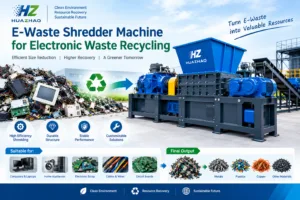
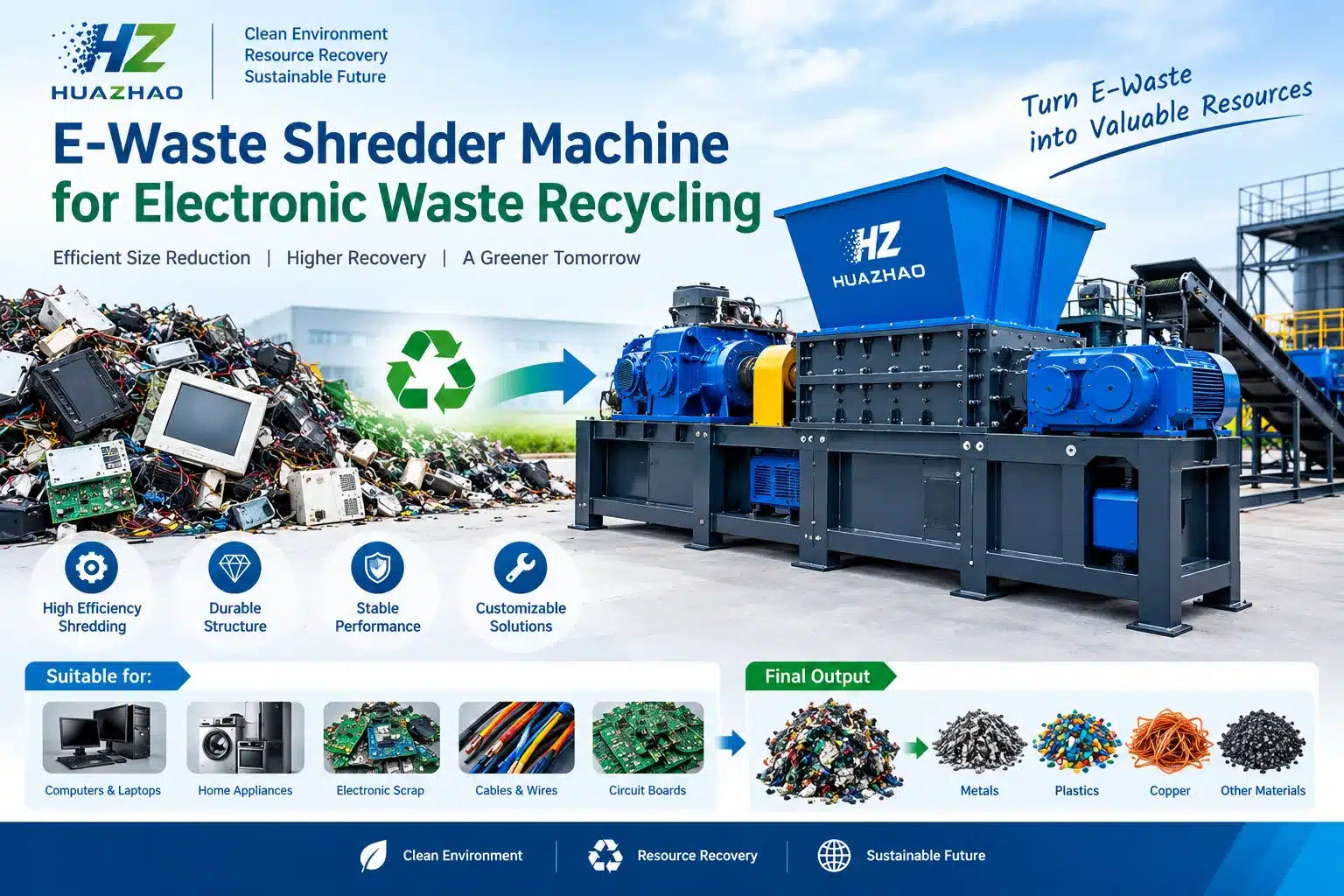
Un e-waste shredder machine is designed to reduce bulky electronic waste into smaller, more manageable pieces for downstream sorting, separation, and material recovery. Depending on the type and condition of the waste, the shredder can be integrated with conveyors, magnetic separators, eddy current separators, sorting systems, and other recycling equipment to create a complete e-waste processing line.
¿Qué es una trituradora de residuos electrónicos?
Un e-waste shredder is an industrial shredding machine used to reduce the size of waste electrical and electronic equipment and electronic scrap.
Unlike ordinary waste shredders, an e-waste shredder needs to handle a mixture of materials, including:
Plásticos
Ferrous metals
Non-ferrous metals
Aluminio
Cobre
Placas de circuito impreso
Cables and wires
Componentes electrónicos
Rubber and other mixed materials
The objective is usually not to completely pulverize the material in a single step. Instead, the shredder prepares the e-waste for subsequent sorting and material separation.
The required shredder configuration depends on the type of electronic waste, feed size, required capacity, desired output size, and downstream recycling process.
¿Qué residuos electrónicos se pueden triturar?
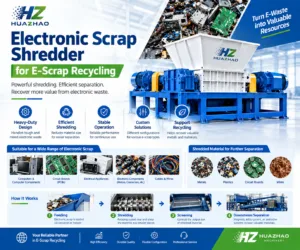
An industrial electronic waste shredder can be used for a wide range of discarded electrical and electronic products.
Typical applications include:
Ordenadores y componentes informáticos
Computers, computer cases, keyboards, and other electronic components can be processed after suitable dismantling and preparation.
Electrodomésticos
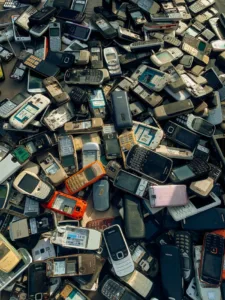
Discarded electrical appliances and small household electronic equipment can be reduced in size before further sorting and separation.
Residuos electrónicos
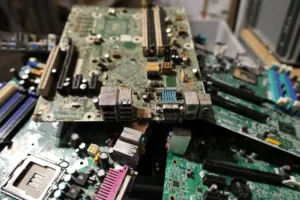
Electronic scrap may contain a combination of plastic housings, metal components, wires, and other materials. Shredding helps create a more uniform feed for downstream separation.
Cables y alambres
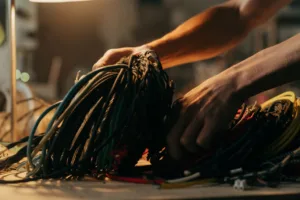
Electrical cables can also be processed in suitable shredding systems. For applications where copper recovery is required, shredding may be followed by cable granulation and separation.
Placas de circuitos impresos y componentes electrónicos
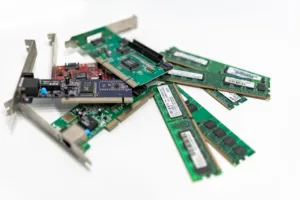
Circuit boards and electronic components can be size-reduced as part of a specialized recycling process. The downstream equipment should be selected according to the desired recovery of metals and other materials.
¿Cómo funciona una trituradora de residuos electrónicos?
The basic e-waste shredding process can be divided into several stages.
1. Alimentación
Electronic waste is loaded into the shredder through a conveyor or feeding system.
Large or bulky items may require pre-sorting or dismantling before entering the shredder.
2. Trituración primaria
The material enters the shredding chamber, where rotating cutting tools reduce the size of the e-waste.
A hydraulic pusher can help feed bulky or irregular materials into the rotor when required.
3. Control del tamaño
A screen can be installed below the rotor to control the size of the shredded material.
Material that is larger than the required size can remain inside the shredding chamber until it reaches the appropriate size.
4. Alta
The shredded material is discharged onto a conveyor for the next stage of processing.
Depending on the recycling objective, the material may then go through magnetic separation, eddy current separation, manual sorting, air separation, or other processes.
Proceso de trituración y reciclaje de residuos electrónicos
A typical industrial e-waste recycling system may follow this process:
E-Waste Feeding → Primary Shredding → Magnetic Separation → Non-Ferrous Metal Separation → Sorting → Further Processing
The exact configuration depends on the material.
For example, a mixed electronic waste stream containing ferrous metals, aluminum, copper, and plastics may require several separation stages after shredding.
The purpose of the shredder is therefore to prepare the material for efficient downstream separation, rather than simply making the smallest possible particles.
¿Por qué utilizar una trituradora para el reciclaje de residuos electrónicos?
Reducir el tamaño del material
Large electronic products are difficult to transport, sort, and process efficiently. Shredding reduces their size and creates a more manageable material stream.
Mejorar la separación en las etapas posteriores
After shredding, different materials can be separated more efficiently using magnetic, eddy current, air, optical, or manual sorting technologies.
Aumentar la eficiencia en la manipulación de materiales
Smaller and more uniform material is easier to convey, store, weigh, and process.
Recuperar materiales valiosos
E-waste may contain valuable metals such as copper and aluminum as well as recyclable plastics. An appropriately designed recycling system can help recover these materials.
Reducir el volumen de residuos
Shredding and recycling can reduce the amount of material ultimately sent for disposal and increase the recovery of usable resources.
Trituradora de residuos electrónicos de un solo eje frente a la de doble eje
Different types of shredders can be used for electronic waste.
Trituradora de un solo eje
A single-shaft shredder generally uses a rotating rotor together with fixed knives and a hydraulic pushing system.
It is suitable for applications where controlled output size and relatively consistent particle size are important.
A screen can be used to control the final output size.
Trituradora de doble eje
A double-shaft shredder uses two counter-rotating shafts equipped with cutting blades.
It is commonly used for bulky, irregular, and difficult-to-handle materials where strong tearing and shearing action are required.
The best choice depends on the material characteristics and the required recycling process.
Cómo elegir una trituradora de residuos electrónicos
Choosing an e-waste shredder should start with the material rather than simply selecting a machine based on motor power.
1. Identificar el tipo de residuos electrónicos
Tell the equipment supplier exactly what materials you intend to process.
Por ejemplo:
Ordenadores
Electrodomésticos
Electronic scrap
Placas de circuito impreso
Cables
Residuos electrónicos mixtos
Different materials can require different cutting configurations.
2. Determinar la capacidad necesaria
Capacity is normally expressed in kg/h or tons per hour.
The required capacity depends on:
Daily processing volume
Horas de trabajo al día
Feed material
Bulk density
Required output size
Feeding method
A machine designed for 300 kg/h may not be suitable for a recycling plant requiring several tons per hour.
3. Definir el tamaño de la ración
The maximum dimensions of the incoming material are important.
If large appliances or bulky electronic products are being processed, the feeding opening and rotor configuration must be selected accordingly.
4. Definir el tamaño de salida requerido
The desired particle size determines the type of shredder and screen configuration.
For some applications, the shredder is only the first size-reduction stage. For others, a smaller and more controlled output may be required before separation.
5. Ten en cuenta los equipos posteriores
The shredder should not be selected independently from the rest of the recycling line.
Por ejemplo:
Shredder → Magnetic Separator → Eddy Current Separator → Sorting → Metal/Plastic Recovery
The entire system should be designed around the final material recovery objectives.
Trituradora de residuos electrónicos para diversas aplicaciones de reciclaje
There is no single e-waste shredder configuration suitable for every type of electronic waste.
Reciclaje de residuos electrónicos
For mixed electronic scrap, the system can be designed for size reduction followed by metal and plastic separation.
Reciclaje de ordenadores
Computer cases and components may require pre-dismantling and controlled shredding before separation.
Reciclaje de cables
Cable and wire recycling generally requires shredding followed by dedicated copper/plastic separation or granulation equipment.
Reciclaje de residuos electrónicos mixtos
For mixed electronic waste, the recycling system may require several stages of sorting and separation to achieve the desired material purity.
Fabricante de trituradoras de residuos electrónicos
When selecting an e-waste shredder manufacturer, it is important to evaluate more than the machine itself.
A suitable supplier should be able to understand:
Your feed material
Material composition
Feed size
Required capacity
Target output size
Downstream separation requirements
Available power supply
Factory space
Installation and commissioning requirements
For a complete recycling project, the supplier should also be able to recommend an appropriate process flow rather than simply providing a standalone shredder.
Sistema de trituración de residuos electrónicos
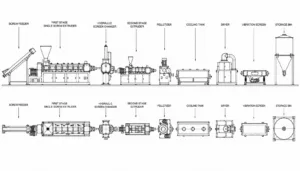
For larger recycling projects, an industrial e-waste shredding system can combine several machines into one continuous process.
A typical system may include:
Feeding Conveyor
↓
Trituradora de residuos electrónicos
↓
Magnetic Separator
↓
Eddy Current Separator
↓
Sorting System
↓
Material Collection
Additional equipment can be added depending on the material and recovery target.
The final process should be customized according to the actual composition of the customer’s e-waste.