ターンキーソリューション

代替テキスト:
機械・設備

プラスチックペレット化設備:機械、プロセス、および購入ガイド

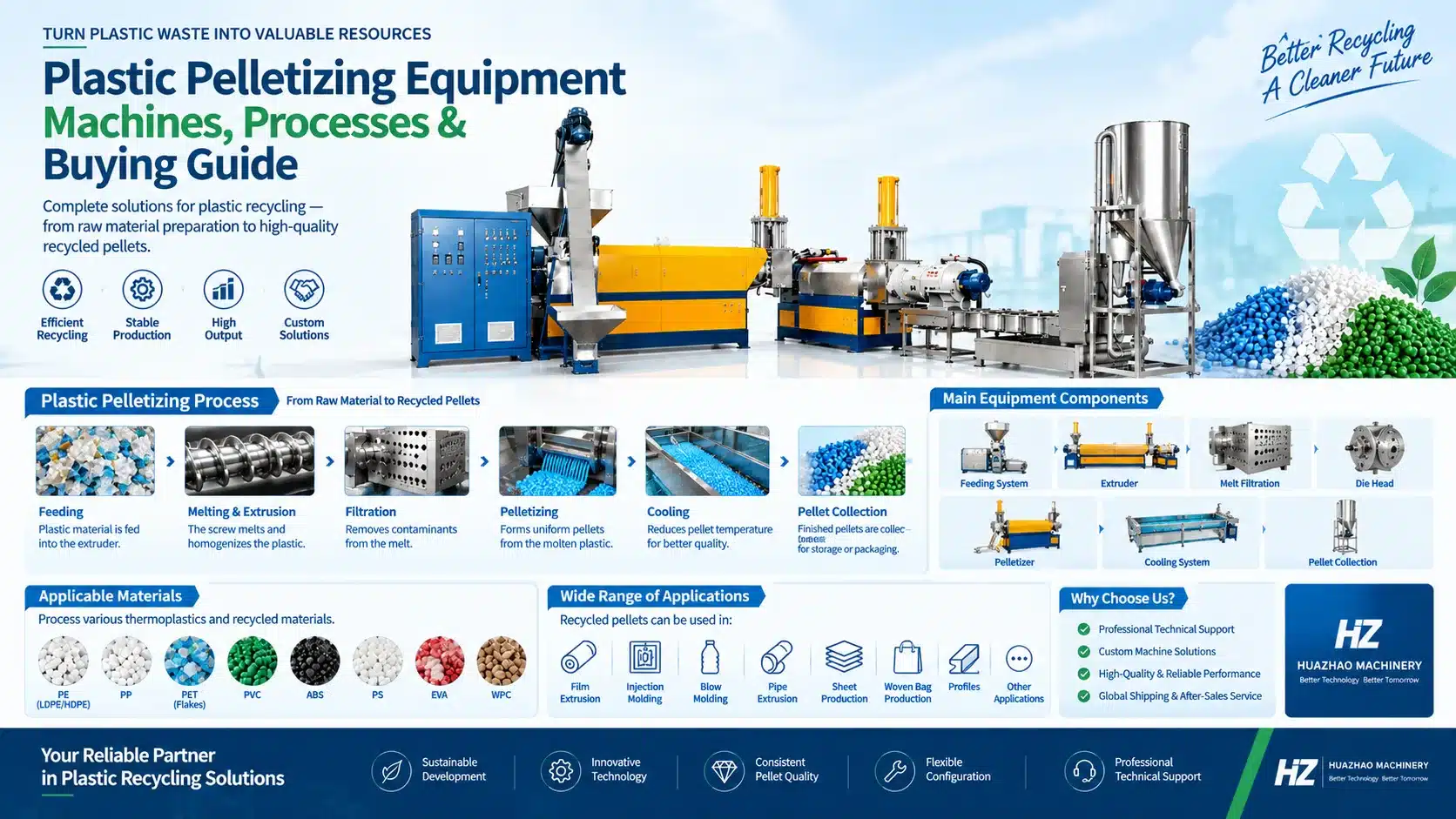
Plastic waste can be recycled into valuable plastic pellets through a properly designed recycling and pelletizing process. A plastic pelletizing machine is one of the key pieces of equipment used to transform clean plastic flakes, film, regrind, or other suitable plastic waste into uniform recycled pellets.

For plastic recycling plants, choosing the right plastic pelletizing machine depends on several factors, including the type of plastic, raw material condition, moisture level, contamination, required capacity, pellet quality, and final application.

This guide explains how a plastic pelletizing machine works, what materials it can process, the main equipment involved, and how to choose a suitable pelletizing system for your recycling project.

プラスチックペレット化設備:機械、プロセス、および購入ガイド 記事を読む »
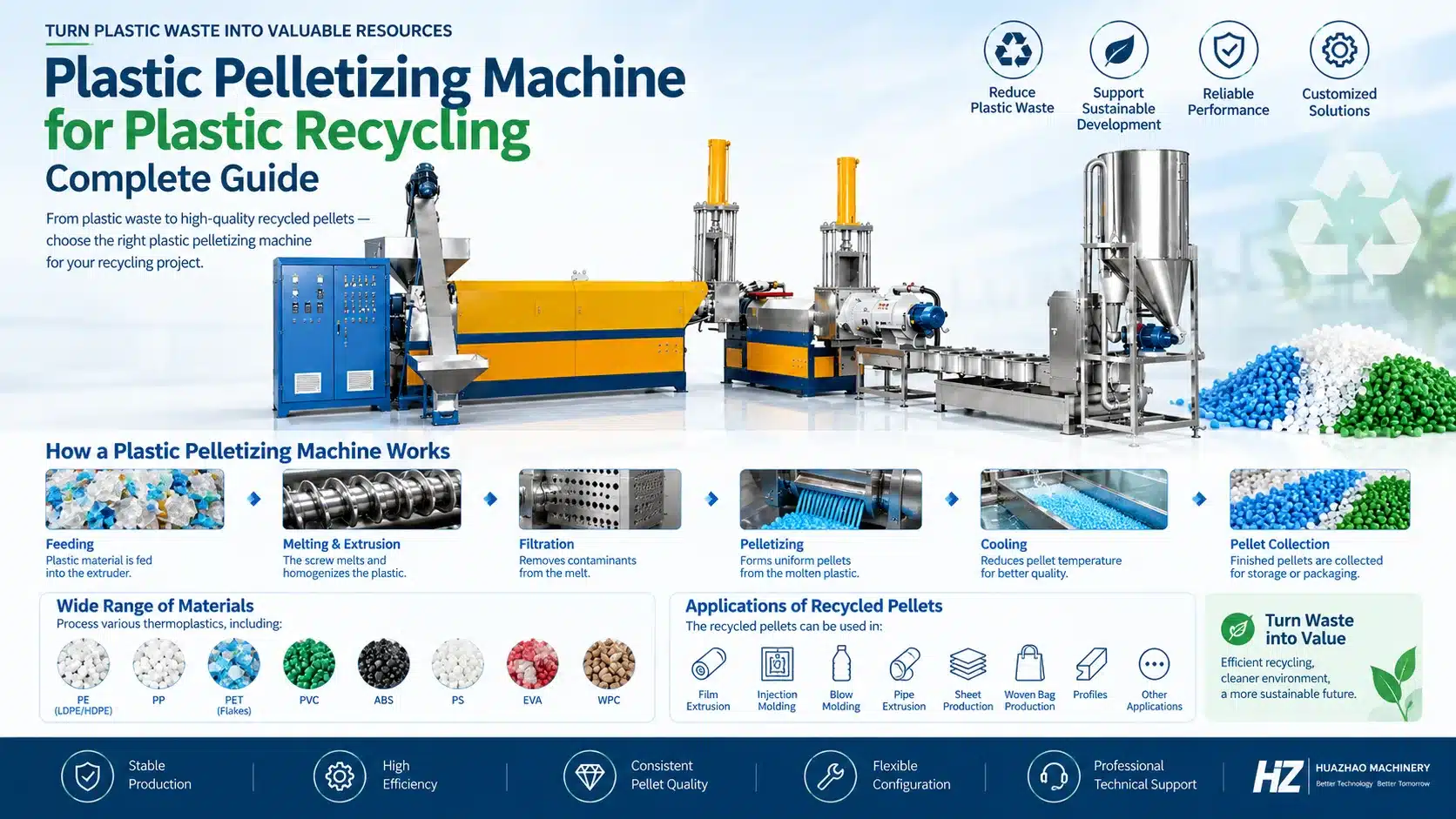
プラスチックリサイクル用ペレット化機の完全ガイド
機械・設備

プラスチックリサイクル用ペレット化機:2026年版完全ガイド

Plastic recycling plants need more than an extruder to turn waste plastic into reusable pellets. A complete plastic pelletizing equipment system may include feeding, extrusion, melt filtration, pelletizing, cooling, and pellet collection equipment, with shredding, washing, and drying equipment added when the raw material requires additional preparation.

Choosing the right equipment depends on the type of plastic, material form, contamination, moisture, required capacity, pellet quality, and final application.

This guide explains the main types of plastic pelletizing equipment, how they work together, and what to consider when selecting equipment for a plastic recycling project.

プラスチックリサイクル用ペレット化機:2026年版完全ガイド 記事を読む »

電子廃棄物リサイクル用シュレッダー
ニュース・展示会

電子廃棄物リサイクル用シュレッダー

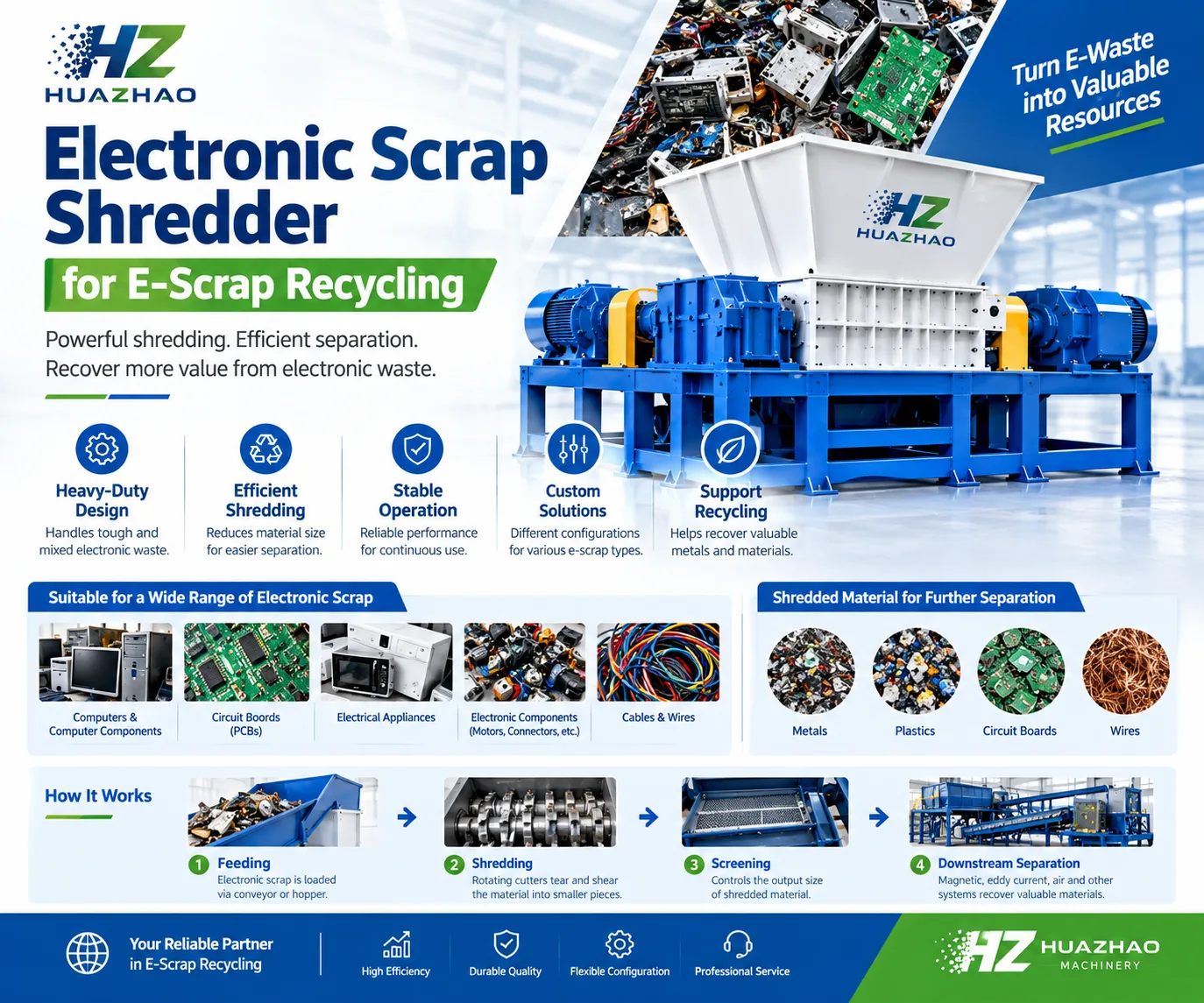
Electronic scrap, commonly called e-scrap or e-waste, includes discarded electronic products and components such as computers, circuit boards, electrical appliances, communication equipment, cables, and other electronic devices.

Before valuable materials can be separated and recovered, electronic scrap often needs to be reduced in size. An electronic scrap shredder provides an efficient solution for shredding bulky and mixed electronic waste into smaller, more manageable pieces for downstream recycling processes.

HuaZhao Machinery designs industrial shredding systems for different types of electronic scrap, helping recycling companies prepare e-waste for sorting, separation, and material recovery.

電子廃棄物リサイクル用シュレッダー 記事を読む »

電子廃棄物リサイクル用シュレッダー機
ニュース・展示会

電子廃棄物リサイクル用シュレッダー機

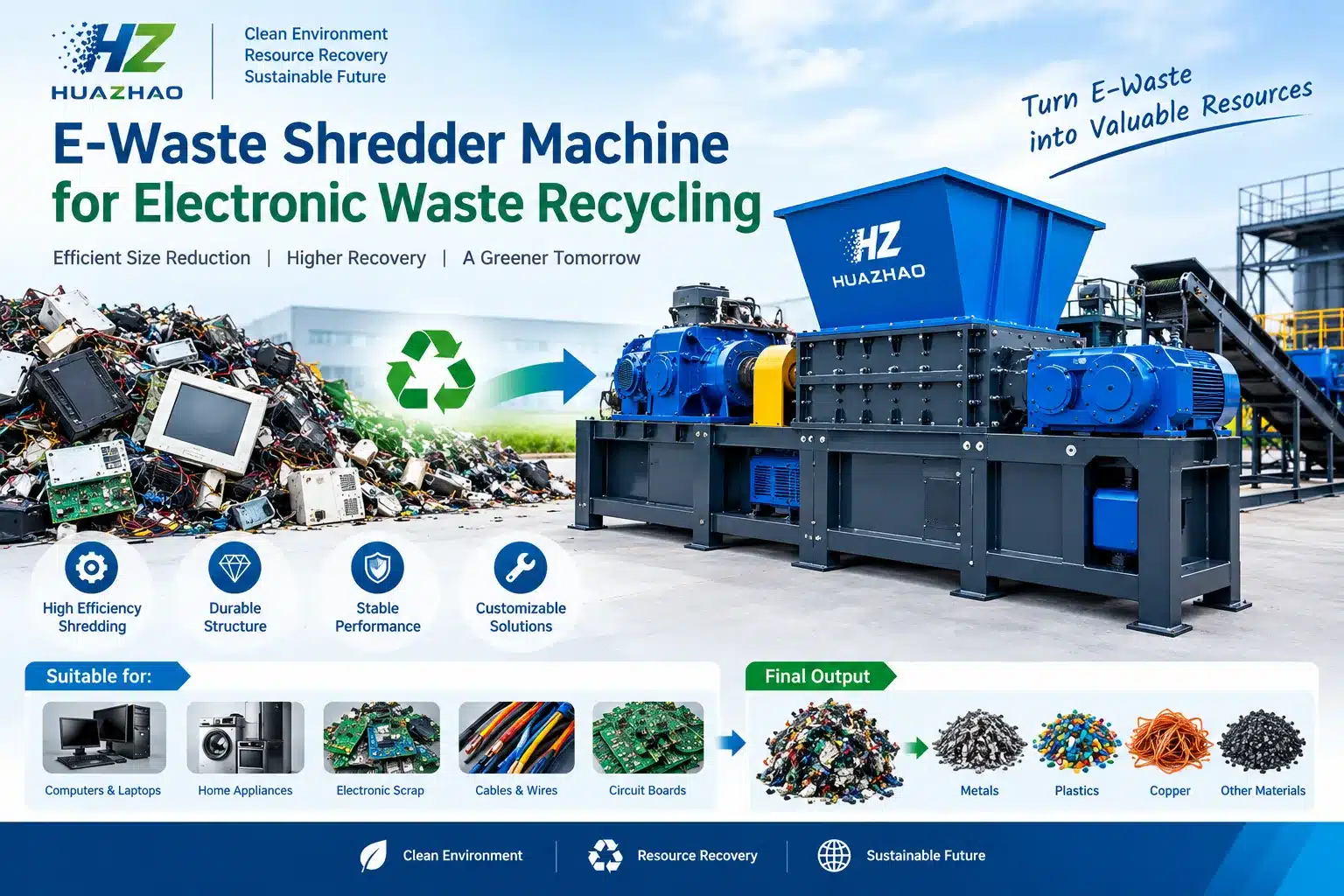
Electronic waste, commonly known as e-waste, includes discarded computers, electrical appliances, electronic devices, cables, circuit boards, and other end-of-life electrical and electronic equipment. As the volume of discarded electronics continues to grow, efficient size reduction has become an important step in modern e-waste recycling.

An e-waste shredder machine is designed to reduce bulky electronic waste into smaller, more manageable pieces for downstream sorting, separation, and material recovery. Depending on the type and condition of the waste, the shredder can be integrated with conveyors, magnetic separators, eddy current separators, sorting systems, and other recycling equipment to create a complete e-waste processing line.

電子廃棄物リサイクル用シュレッダー機 記事を読む »

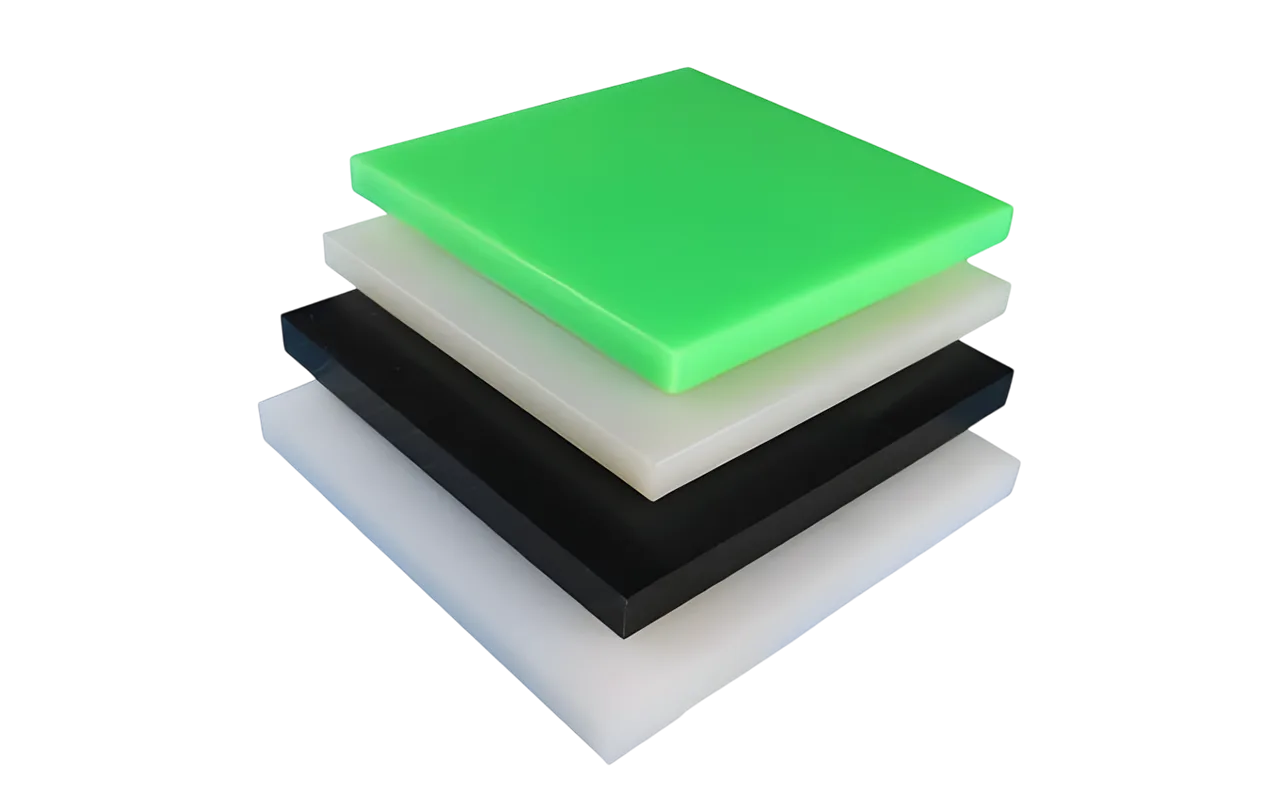
HDPE kitchen cutting boards
機械・設備

HDPEのリサイクルとは?|2026年版 完全ガイド

High-Density Polyethylene (HDPE) is one of the most versatile and widely used plastics in the world. Known for its excellent strength, durability, chemical resistance, and cost-effectiveness, HDPE has become an essential material across numerous industries. It is commonly used in the production of bottles, containers, pipes, plastic pallets, crates, household products, industrial packaging, and many other applications.

As global plastic consumption continues to grow, the recycling of HDPE has become increasingly important. Millions of tons of HDPE products reach the end of their service life every year, creating both environmental challenges and valuable recycling opportunities. Unlike many other materials, HDPE can be recycled multiple times and converted into high-quality recycled plastic pellets that can be reused in manufacturing new products.

The HDPE recycling process typically involves collection, sorting, washing, shredding, melting, filtration, extrusion, and pelletizing. Modern HDPE recycling and pelletizing systems help transform post-consumer and post-industrial plastic waste into valuable raw materials while reducing landfill waste and conserving natural resources. Recycled HDPE pellets are widely used in the production of pipes, containers, construction materials, injection-molded products, and various industrial applications.

In this guide, we will explore what HDPE is, its common applications, the differences between HDPE and LDPE, whether HDPE can be recycled, how the HDPE recycling process works, and the equipment required to produce high-quality recycled HDPE pellets efficiently.

HDPEのリサイクルとは?|2026年版 完全ガイド 記事を読む »

無料のリサイクルソリューションを入手しましょう

お問い合わせフォームのデモ