Table of Contents
Electronic Scrap Shredder for E-Scrap Recycling
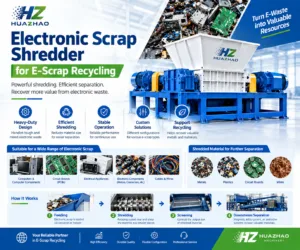
Electronic scrap, commonly called e-scrap or e-waste, includes discarded electronic products and components such as computers, circuit boards, electrical appliances, communication equipment, cables, and other electronic devices.
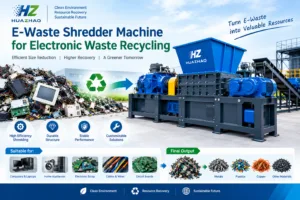
Before valuable materials can be separated and recovered, electronic scrap often needs to be reduced in size. An electronic scrap shredder provides an efficient solution for shredding bulky and mixed electronic waste into smaller, more manageable pieces for downstream recycling processes.
HuaZhao Machinery designs industrial shredding systems for different types of electronic scrap, helping recycling companies prepare e-waste for sorting, separation, and material recovery.
What Is an Electronic Scrap Shredder?
An electronic scrap shredder is an industrial machine used to reduce the size of discarded electronic products and components.
Unlike conventional plastic shredders, e-scrap shredders need to handle a mixture of materials. Electronic waste may contain:
Plastics
Aluminum
Copper
Steel
Circuit boards
Wires and cables
Electronic components
Small motors
Connectors and housings
The shredding process breaks down larger electronic products into smaller pieces, making subsequent separation and recovery more efficient.
What Electronic Scrap Can Be Shredded?
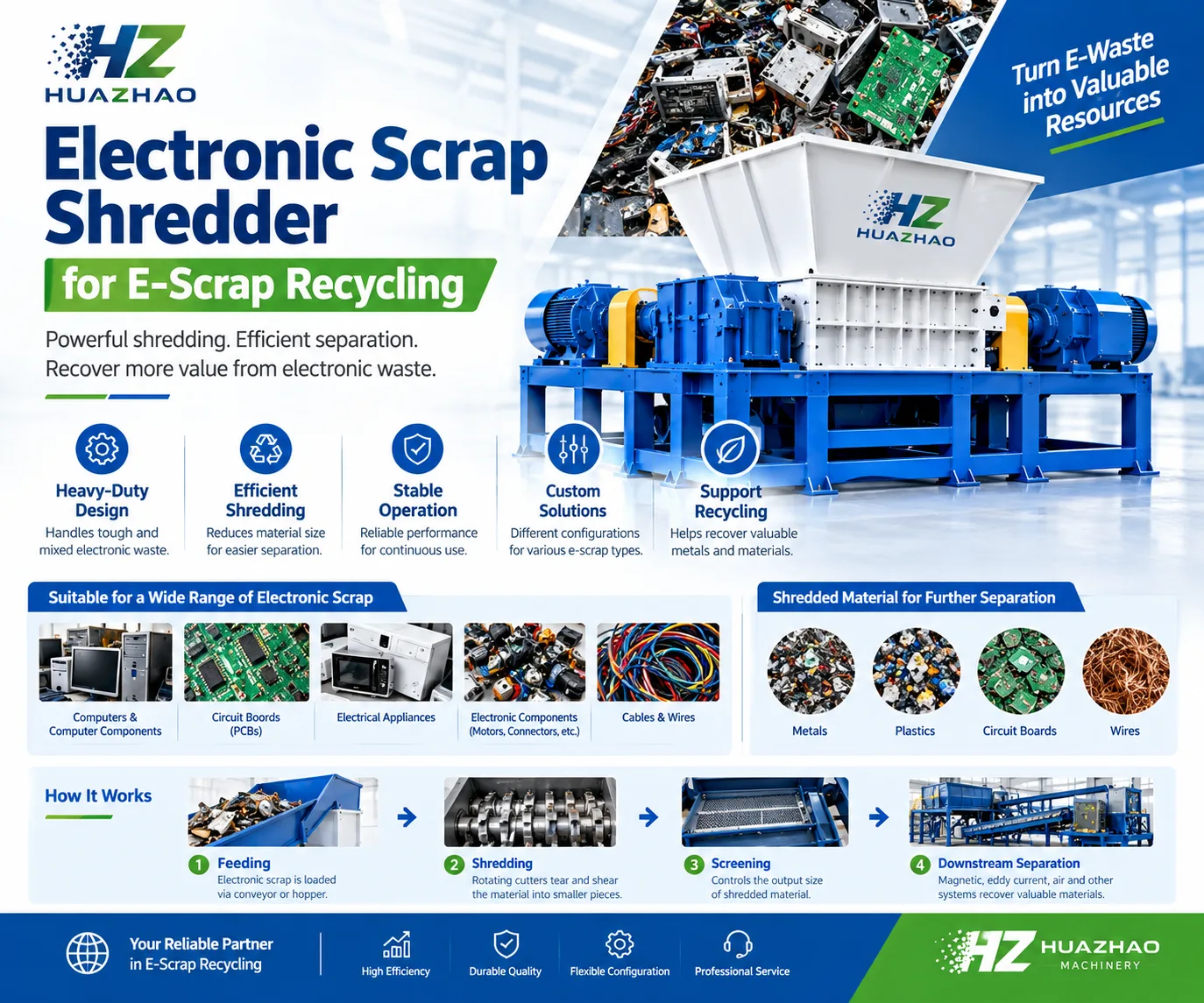
An e-scrap recycling line may process many different types of electronic waste. Depending on the machine configuration, an electronic scrap shredder can be used for materials such as:
1. Computers and Computer Components
Old computers, computer cases, keyboards, printers, and other equipment can be shredded before further sorting.
2. Circuit Boards
Printed circuit boards (PCBs) contain a mixture of plastics, copper, electronic components, and other materials. Shredding helps prepare them for downstream metal recovery and separation.
3. Electrical Appliances
Discarded electrical equipment can be bulky and difficult to process manually. Industrial shredding reduces the size of these products and improves material handling.
4. Electronic Components
Small motors, housings, connectors, switches, and other electronic components can also be processed through suitable shredding equipment.
5. Cables and Wires
Depending on the recycling process, cables may be shredded before entering a cable granulation or separation system.
How Does an E-Scrap Shredder Work?
A typical electronic scrap shredding process consists of several basic steps.
Step 1: Feeding
Electronic scrap is loaded into the shredder through a feeding conveyor, hopper, or other suitable feeding system.
Large electronic products can be fed continuously depending on the material size and production requirements.
Step 2: Primary Shredding
The material enters the shredding chamber, where rotating cutting tools tear and shear the electronic scrap into smaller pieces.
The shredding configuration can be selected according to the material type, feed size, required capacity, and desired output size.
Step 3: Size Control
A screen can be used to control the size of the shredded material.
Material that is still too large can remain in the shredding chamber until it reaches the required size.
Step 4: Downstream Separation
After shredding, the material can be sent to additional recycling equipment.
Depending on the e-scrap composition, a recycling system may include:
Magnetic separator
Eddy current separator
Air separator
Density separator
Cable granulator
Screening equipment
Manual or optical sorting equipment
The objective is to separate valuable materials such as copper, aluminum, ferrous metals, and recyclable plastics.
Why Is Shredding Important in E-Scrap Recycling?
Size reduction is an important step in electronic waste recycling because electronic products are usually made from multiple materials.
For example, a discarded electronic device may contain a plastic housing, steel parts, aluminum components, copper wires, and a circuit board.
Shredding can:
Reduce material size
Smaller particles are easier to transport, screen, and separate.
Improve material liberation
Shredding can break apart components and expose different materials for downstream separation.
Increase processing efficiency
Automated shredding reduces the amount of manual size reduction required.
Prepare material for separation
The shredded output can be processed by magnetic, eddy current, air, density, or other separation systems.
Electronic Scrap Shredder vs. Conventional Plastic Shredder
Although both machines perform size reduction, e-scrap processing presents different challenges.
Electronic scrap may contain hard metals, circuit boards, wires, and mixed materials. Therefore, the shredder needs to be selected based on the actual feedstock rather than simply using a standard plastic recycling machine.
| Feature | Electronic Scrap Shredder | Plastic Shredder |
|---|---|---|
| Feedstock | Mixed electronic waste | Plastic waste |
| Materials | Plastic + metal + electronic components | Mainly plastics |
| Material hardness | Variable | Generally more consistent |
| Cutting system | Heavy-duty configuration | Plastic-specific configuration |
| Downstream process | Sorting and metal recovery | Washing or pelletizing |
| Typical application | E-waste recycling | Plastic recycling |
For this reason, the best shredder configuration depends heavily on the type and composition of the electronic scrap.
How to Choose an Electronic Scrap Shredder
Before selecting an e-scrap shredder, recycling companies should provide several key details.
Material Type
Tell the equipment manufacturer what types of electronic scrap will be processed.
For example:
Computers
Circuit boards
Electrical appliances
Electronic components
Cables
Mixed e-scrap
Feed Size
The dimensions of the largest pieces entering the machine are important when selecting the feeding system and shredding chamber.
Required Capacity
Capacity is normally specified in kg/h or tons per hour.
The required capacity determines the machine size, motor configuration, feeding system, and overall recycling line design.
Required Output Size
Different recycling processes require different particle sizes.
If the shredded material will be sent to a metal separation system, the target particle size should be considered when selecting the cutting system and screen.
Material Composition
The proportion of plastic, aluminum, copper, steel, circuit boards, and other materials can significantly affect the shredding process.
For mixed e-scrap, a material sample or detailed description is useful for confirming the appropriate machine configuration.
Electronic Scrap Shredding and Material Recovery
Shredding is usually not the final recycling step.
A complete e-scrap recycling system may combine shredding with several separation technologies.
A typical process can be:
Electronic Scrap → Shredding → Screening → Magnetic Separation → Eddy Current Separation → Air/Density Separation → Material Recovery
Ferrous metals can be recovered using magnetic separation, while non-ferrous metals such as aluminum and copper can be further separated using suitable downstream equipment.
Plastics can also be collected and processed separately depending on their type and purity.
The exact process should be designed according to the composition of the incoming electronic scrap and the materials the recycler wants to recover.
Advantages of an Industrial E-Scrap Shredder
An appropriately configured electronic scrap shredder can provide several benefits:
Heavy-duty size reduction
Continuous industrial operation
Processing of mixed electronic materials
Controlled output size
Improved material handling
Preparation for automated sorting
Integration with downstream recycling equipment
Reduced dependence on manual size reduction
For recycling companies handling significant volumes of e-scrap, an industrial shredder can become an important part of the overall material recovery system.
Common Questions About E-Waste Shredder Machine
Q: Can an electronic scrap shredder process circuit boards?
A:
Yes. Suitable shredding equipment can be used for circuit boards and electronic components. However, the machine configuration should be selected according to the PCB type, feed size, required capacity, and downstream separation process.
Q: Can an e-scrap shredder process both plastic and metal?
A:
Yes. Electronic scrap commonly contains both plastics and metals. A heavy-duty shredder can be configured for mixed-material applications, but the actual composition should be evaluated before selecting the cutting system.
Q: What happens after electronic scrap is shredded?
A:
The shredded material can be screened and separated using equipment such as magnetic separators, eddy current separators, air separators, and other sorting systems. The appropriate process depends on the materials that need to be recovered.
Q: What capacity can an electronic scrap shredder handle?
A:
The required capacity depends on the type of e-scrap, feed size, desired output size, and operating conditions. HuaZhao Machinery can recommend a suitable configuration after reviewing the material and production requirements.
Q: Can the shredder be integrated into a complete e-waste recycling line?
A:
Yes. The shredder can be designed as part of a larger recycling system together with conveyors, screens, magnetic separation, eddy current separation, and other material recovery equipment.
Q: Get an Electronic Scrap Shredding Solution
A:
The price depends on the machine type, capacity, motor power, feeding system, cutting configuration, screen, automation level, and whether additional sorting and separation equipment is included.
Q: Get an E-Waste Shredder Solution
Choosing the right electronic scrap shredder starts with understanding the material.
If you are planning an e-scrap or e-waste recycling project, provide us with your material type, feed size, required capacity, target output size, and recycling objective.
HuaZhao Machinery can evaluate your application and recommend a suitable electronic scrap shredding and recycling solution.
Tell us about your electronic scrap recycling requirements and we will help you develop a suitable shredding solution.