Table of Contents
What Is Plastic Pelletizing Equipment?
Plastic pelletizing equipment refers to the machines and auxiliary systems used to process plastic materials into recycled plastic pellets.
Unlike the term plastic pelletizing machine, which can refer to the main pelletizing unit, plastic pelletizing equipment can describe the broader equipment configuration used throughout the pelletizing process.
A typical system can include:
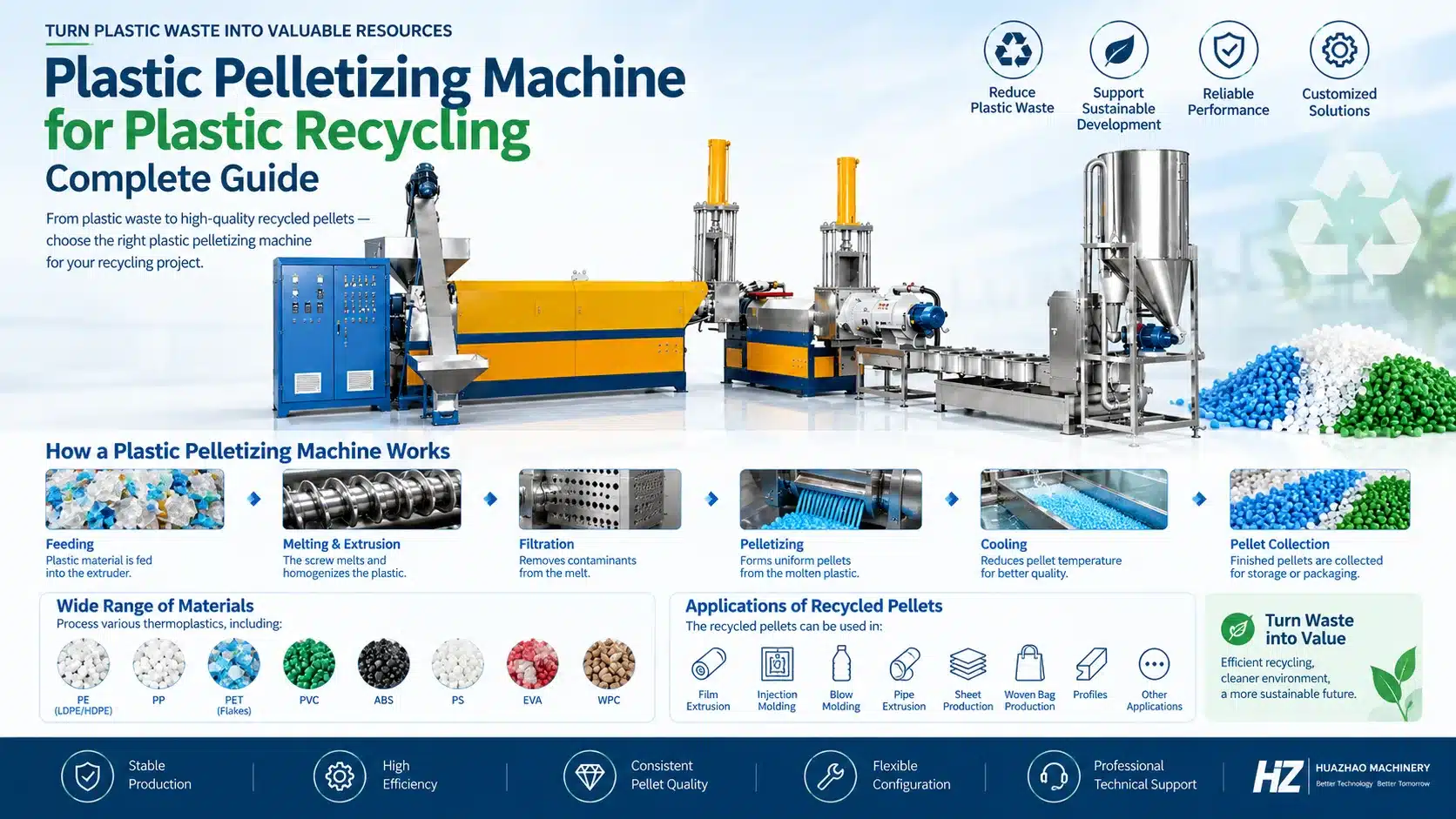
Feeding → Extrusion → Melt Filtration → Die Head → Pelletizing → Cooling → Pellet Collection
Depending on the raw material, the complete recycling process may also include:
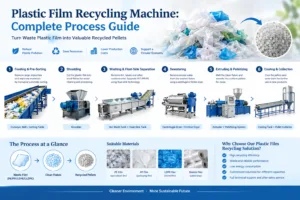
Sorting → Shredding → Washing → Dewatering → Drying → Pelletizing
The equipment configuration should be selected according to the actual material rather than using the same system for every type of plastic.
References
Pelletizing is the process of compressing or molding a material into the shape of a pellet. A wide range of different materials are pelletized including chemicals, iron ore, animal compound feed, plastics (nurdles), waste materials, and more. The process is considered an excellent option for the storage and transport of said materials. The technology is widely used in the powder metallurgy engineering and medicine industries.
Plastic recycling is the processing of plastic waste into other products. Recycling can reduce dependence on landfills, conserve resources and protect the environment from plastic pollution and greenhouse gas emissions. Recycling rates lag behind those of other recoverable materials, such as aluminium, glass and paper. From the start of plastic production through to 2015, the world produced around 6.3 billion tonnes of plastic waste, only 9% of which has been recycled and only ~1% has been recycled more than once. Of the remaining waste, 12% was incinerated and 79% was either sent to landfills or released into the environment as pollution.
Almost all plastic is non-biodegradable and without recycling, spreads across the environment where it causes plastic pollution. For example, as of 2015, approximately 8 million tonnes of waste plastic enters the oceans annually, damaging oceanic ecosystems and forming ocean garbage patches.
Most plastic recycling is currently mechanical and involves the melting and reforming of plastic into other items. This can cause polymer degradation at the molecular level, and requires that waste be sorted by colour and polymer type before processing, which is often complicated and expensive. Errors can lead to material with inconsistent properties, rendering it unappealing to industry. Though filtration in mechanical recycling reduces microplastic release, even the most efficient filtration systems cannot prevent the release of microplastics into wastewater.
In feedstock recycling, waste plastic is converted into its starting chemicals, which can then become fresh plastic. This involves higher energy and capital costs. Alternatively, plastic can be burned in place of fossil fuels in energy recovery facilities, or biochemically converted into other useful chemicals for industry. In some countries, burning is the dominant form of plastic waste disposal, particularly where landfill diversion policies are in place.
Plastic recycling is low in the waste hierarchy; waste reduction and plastic reuse are more favourable and long-term solutions for environmental sustainability. Recycling of plastics has been encouraged since the early 1970s, however, due to economic and technical challenges, such recycling did not impact the management of plastic waste to any significant extent until the late 1980s.
Source: Wikipedia, Plastic recycling Wikipedia – Plastic recycling
What Equipment Is Used for Plastic Pelletizing?
A complete plastic pellet manufacturing system normally consists of several major equipment sections.
1. Feeding Equipment
The feeding system continuously delivers plastic material into the extruder.
Different materials require different feeding solutions.
For example:
Plastic flakes can usually be fed relatively easily.
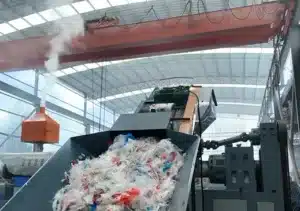
Lightweight film may require a compactor or force-feeding system.
PP woven bags may require cutting and densification before extrusion.
Washed flakes require controlled feeding after drying.
Stable feeding is important because fluctuations in material supply can affect extrusion pressure and output.
2. Plastic Extruder
The extruder is the core processing equipment in a plastic pelletizing system.
It transports, melts, mixes, and homogenizes the plastic material.
The main factors to consider include:
Screw diameter
Screw design
L/D ratio
Motor power
Heating zones
Cooling system
Processing temperature
Expected output
The screw configuration should be matched to the polymer and raw material.
PE, PP, PET, PVC, ABS, EVA, and other plastics have different processing characteristics and should not automatically use the same screw design.
3. Melt Filtration Equipment
Melt filtration removes solid contaminants from the molten plastic before pelletizing.
This is particularly important when processing recycled plastic.
Common contaminants include:
Paper
Dirt
Aluminum
Wood
Unmelted particles
Foreign plastic materials
For relatively clean industrial scrap, a standard screen changer may be sufficient.
For contaminated post-consumer plastic, continuous or automatic filtration can provide better production stability.
4. Die Head
The die head distributes the filtered plastic melt and forms the material into strands or another suitable shape before pelletizing.
The die design needs to match:
Polymer type
Melt temperature
Extrusion output
Pelletizing method
Desired pellet size
5. Pelletizing Equipment
The pelletizing section converts the extruded plastic into small pellets.
A common solution for recycled plastics is strand pelletizing.
The process is:
Molten Plastic → Die Head → Plastic Strands → Cooling → Cutting → Pellets
The pelletizing system should provide stable cutting and consistent pellet size.
6. Cooling Equipment
Freshly extruded plastic strands or pellets need to be cooled before collection.
Cooling can help stabilize the pellet shape and temperature.
The cooling system is selected according to the pelletizing method and production capacity.
7. Pellet Collection Equipment
After cooling and pelletizing, the finished pellets are collected for storage or packaging.
Depending on the project, the system may include:
Pellet dryer
Vibrating screen
Air conveying system
Storage hopper
Bagging system
Silo
Plastic Recycling Equipment Before Pelletizing
Not all plastic waste can go directly into a pelletizing system.
Post-consumer plastic often requires several preparation stages.
Sorting Equipment
Sorting separates different polymers and removes unwanted materials.
This is particularly important when the final recycled pellets need consistent properties.
Shredding Equipment
A shredder reduces large plastic waste into smaller pieces.
Typical applications include:
Plastic film
Woven bags
Large containers
Plastic lumps
Industrial scrap
Crushing Equipment
A plastic crusher can reduce material into smaller flakes suitable for washing or further processing.
The required crusher configuration depends on the size and hardness of the material.
Washing Equipment
Contaminated plastic may require washing before pelletizing.
A plastic washing system can include:
Pre-washing
Friction washing
Hot washing
Rinsing
Separation
The washing process depends on the type and level of contamination.
Dewatering and Drying Equipment
Washed plastic flakes contain moisture and need to be dried before extrusion.
The drying system can include mechanical dewatering and thermal drying.
Moisture control is especially important for materials such as PET.
Plastic Pelletizing Process
A complete plastic recycling process varies according to the raw material.
Clean Industrial Plastic Scrap
For clean production scrap, the process may be relatively simple:
Plastic Scrap → Feeding → Extrusion → Filtration → Pelletizing → Cooling → Collection
Plastic Flakes
For washed plastic flakes:
Plastic Waste → Sorting → Crushing → Washing → Dewatering → Drying → Feeding → Extrusion → Filtration → Pelletizing
Plastic Film
For waste plastic film:
Sorting → Shredding → Washing → Dewatering → Drying → Compaction → Extrusion → Filtration → Pelletizing
This is why plastic pelletizing equipment should be selected as part of the complete recycling process.
Plastic Pelletizing Equipment for Different Materials
PE Pelletizing Equipment
PE recycling applications can include LDPE and HDPE.
Typical materials include:
LDPE film
Agricultural film
Packaging film
HDPE bottles
HDPE containers
HDPE drums
Production scrap
Film usually requires special attention to feeding and compaction, while rigid HDPE flakes may require a different feeding configuration.
PP Pelletizing Equipment
PP recycling materials include:
PP woven bags
Raffia
PP containers
Automotive plastic
Industrial PP scrap
The equipment configuration depends heavily on whether the material is clean production scrap, washed flakes, or contaminated post-consumer waste.
PET Pelletizing Equipment
PET flakes require careful moisture control.
A typical process can include:
PET Bottles → Sorting → Crushing → Washing → Separation → Drying → Extrusion → Filtration → Pelletizing
PET processing equipment should be selected with the material’s moisture sensitivity in mind.
PVC Pelletizing Equipment
PVC requires careful processing temperature control because excessive heat can lead to material degradation.
PVC pelletizing equipment should therefore be configured according to the PVC formulation, additives, and specific recycling application.
Single-Stage vs. Two-Stage Plastic Pelletizing Equipment
Different recycling applications can use different extrusion configurations.
Single-Stage Pelletizing
A single extruder can be suitable for relatively clean and consistent plastic materials.
Advantages may include:
Simpler system
Lower equipment cost
Lower footprint
Easier operation
It can be suitable for some clean industrial plastic scrap and relatively consistent recycled materials.
Two-Stage Pelletizing
A two-stage system uses two extrusion sections to provide additional processing and homogenization.
It can be considered for materials that require:
Better mixing
More intensive homogenization
Improved degassing
Additional processing control
More stable material quality
The appropriate configuration depends on the raw material and final product requirements.
How to Choose Plastic Pelletizing Equipment
Selecting equipment should start with the raw material.
1. Identify the Polymer
First determine whether the material is:
PE
PP
HDPE
LDPE
PET
PVC
ABS
PS
EVA
Other thermoplastics
Different polymers require different processing conditions.
2. Check the Material Form
Determine whether the material is:
Film
Flakes
Regrind
Woven bags
Rigid plastic
Lumps
Production scrap
Material form directly affects the feeding and preparation equipment.
3. Measure Moisture
Moisture is especially important for washed flakes.
Excessive moisture can cause:
Bubbles
Unstable extrusion
Poor pellet appearance
Pressure fluctuations
Material degradation
4. Evaluate Contamination
The contamination level determines the required filtration system.
Clean industrial scrap and heavily contaminated post-consumer plastic should not be equipped with the same filtration system without evaluation.
5. Define Production Capacity
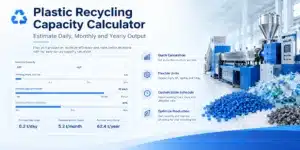
The required capacity should be based on the actual stable output.
Typical projects may require several hundred kilograms per hour, while larger recycling plants may require capacities of 1,000 kg/h or more.
However, the actual output depends on:
Material type
Bulk density
Moisture
Contamination
Feeding efficiency
Screw design
Filtration
Processing conditions
6. Define the Final Pellet Application
The final use of the recycled pellets affects equipment selection.
Possible applications include:
Film extrusion
Injection molding
Blow molding
Pipe extrusion
Sheet production
Woven bags
Plastic profiles
Higher-quality applications may require better raw material sorting, filtration, and processing control.
Plastic Pellet Manufacturing Equipment: Capacity Considerations
Capacity is one of the most important factors when selecting plastic pellet manufacturing equipment.
However, the machine’s advertised maximum output should not be considered the actual production rate for every material.
For example, lightweight plastic film may have a much lower bulk density than rigid plastic flakes.
The same extruder can therefore behave differently when processing the two materials.
A professional equipment supplier should evaluate:
Raw Material + Bulk Density + Moisture + Contamination + Feeding Method + Extrusion Configuration
before confirming the expected output.
For HuaZhao recycling projects, common pelletizing capacities can range from approximately 250 kg/h to 1,000 kg/h or more, depending on the material and machine configuration.
What Affects the Cost of Plastic Pelletizing Equipment?
There is no universal price for a complete plastic pelletizing system.
The equipment cost depends on the required configuration.
Important factors include:
Extruder size
Motor power
Screw configuration
Feeding system
Compactor
Screen changer
Filtration system
Pelletizing method
Cooling system
Automation
Pellet collection
Auxiliary equipment
Washing and drying equipment
A complete line for contaminated post-consumer plastic will normally require more equipment than a system for clean factory scrap.
When comparing quotations from plastic pelletizing equipment suppliers, buyers should compare the complete technical configuration rather than only the total price.
How to Compare Plastic Pelletizing Equipment Suppliers
Choosing a supplier is not only about finding the lowest quotation.
A professional supplier should be able to understand the customer’s raw material and recommend an appropriate system.
Consider the following factors.
Material Testing
Ask whether the supplier can evaluate or test your actual plastic material.
Equipment Configuration
Check exactly what equipment is included in the quotation.
Stable Production
Ask for the expected stable production capacity rather than only the theoretical maximum.
Energy Consumption
Compare the installed power and typical operating power.
Filtration System
Make sure the filtration system matches the contamination level of your raw material.
After-Sales Support
Consider installation, commissioning, operator training, spare parts, and technical support.
Customization
A recycling line should be adaptable to the customer’s material and factory conditions.
Plastic Pelletizing Equipment for a Complete Recycling Plant
For a commercial plastic recycling plant, pelletizing equipment is often only one part of the overall project.
A complete plant may include:
Raw Material Storage
↓
Sorting
↓
Shredding / Crushing
↓
Washing
↓
Dewatering
↓
Drying
↓
Feeding / Compaction
↓
Extrusion
↓
Melt Filtration
↓
Pelletizing
↓
Cooling
↓
Pellet Drying / Separation
↓
Pellet Collection
Not every project requires every stage.
For clean industrial waste, washing equipment may be unnecessary.
For heavily contaminated post-consumer waste, however, sorting, washing, drying, and high-performance filtration can be essential.
The objective is to build a system that matches the actual material and required pellet quality without adding unnecessary equipment.
Common Problems When Selecting Pelletizing Equipment
Choosing Equipment Only by Capacity
A machine rated at 500 kg/h does not necessarily produce 500 kg/h with every material.
Ignoring Material Moisture
Wet material can cause extrusion instability and poor pellet quality.
Using Insufficient Filtration
High contamination can quickly overload an unsuitable screen filtration system.
Using the Same Configuration for Different Plastics
PE, PP, PET, PVC, and engineering plastics have different processing requirements.
Focusing Only on Purchase Price
The total cost of ownership also includes electricity, maintenance, spare parts, labor, and downtime.
Planning Your Plastic Pelletizing Equipment
The most effective way to select plastic pelletizing equipment is to start with the material rather than the machine.
Before requesting a quotation, prepare:
Plastic type
Raw material photos or videos
Material form
Moisture content
Contamination level
Required capacity
Desired pellet size
Final pellet application
Available factory space
Local power supply
With this information, the equipment configuration can be designed around the actual recycling process.
For plastic recycling plants processing PE film, PP woven bags, HDPE flakes, PET flakes, PVC, or other thermoplastics, a properly matched combination of preparation, extrusion, filtration, and pelletizing equipment can provide more stable production and consistent recycled pellets.
Common Questions About Plastic Pelletizing Machine
Q: What is plastic pelletizing equipment?
A:
Plastic pelletizing equipment is the group of machines used to melt, filter, pelletize, cool, and collect plastic materials during plastic recycling.
Q: What equipment is needed for plastic pellet production?
A:
A basic system can include a feeder, extruder, screen changer, die head, pelletizer, cooling system, and pellet collection equipment. Depending on the raw material, shredding, washing, drying, and other auxiliary equipment may also be required.
Q: Can plastic pelletizing equipment process plastic film?
A:
Yes. PE and PP film can be processed with appropriately configured equipment. Lightweight film may require compaction or specialized feeding equipment.
Q: Do all plastic recycling projects need a washing line?
A:
No. Clean industrial plastic scrap may not require washing. Contaminated post-consumer plastic normally requires sorting, washing, dewatering, and drying before pelletizing.
Q: How much does plastic pelletizing equipment cost?
A:
The cost depends on capacity, material type, feeding system, extruder configuration, filtration, pelletizing method, automation, and auxiliary equipment. A complete recycling plant will cost more than a standalone pelletizing system.nes.
Q: How can I choose a plastic pelletizing equipment supplier?
A:
Look for a supplier that can evaluate your actual raw material, provide a detailed equipment configuration, confirm realistic production capacity, and provide technical support, installation, commissioning, and spare parts.